


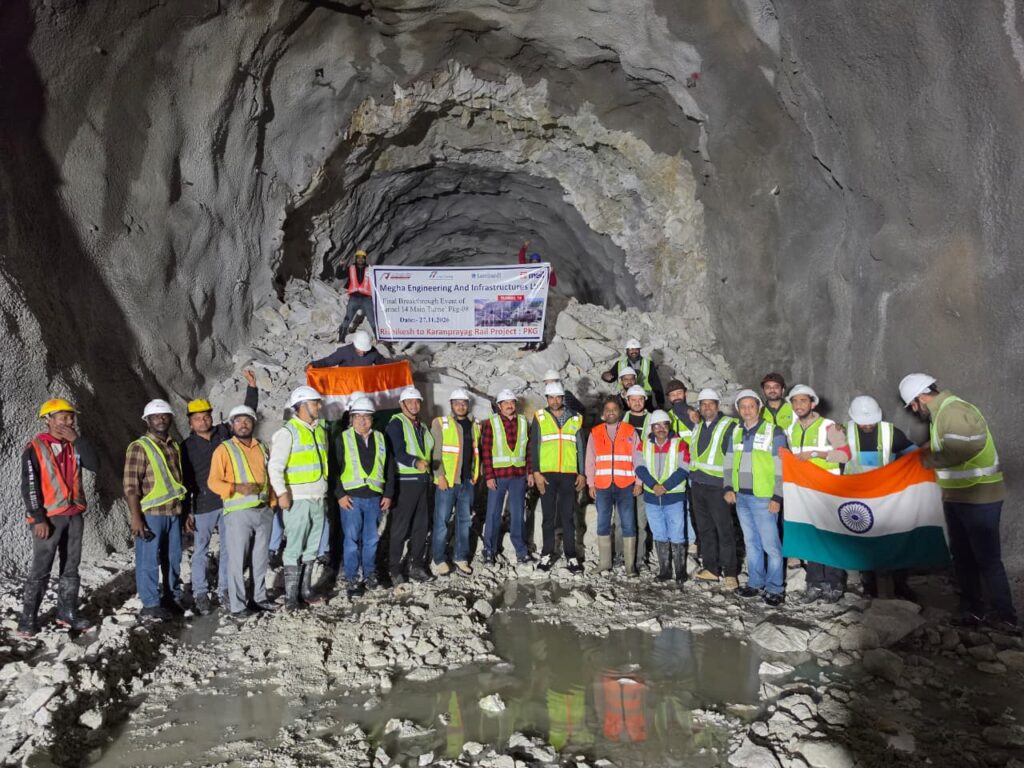
The breakthrough, achieved by Rail Vikas Nigam Limited (RVNL), connects two separately excavated sections of the tunnel, comprising 4.7 km from Portal-1 at Sumerpur and 1.79 km from Portal-2 at Marora. The achievement marks significant progress in the construction of one of the important underground infrastructure components of the railway project being developed in the challenging Himalayan terrain.
The successful joining of the two sections is particularly significant given the complex geological conditions, difficult ground stability, safety requirements and challenges associated with tunnelling beneath inhabited areas.
Complex Excavation Through Loose Soil at Sumerpur
One of the major engineering challenges was encountered at Portal-1 (T14P1), where a 110-metre stretch of the triple-track tunnel had to be excavated through loose soil beneath inhabited areas.
The excavation was carried out with only 20–30 metres of soil and rock above the tunnel, requiring specialised construction techniques to maintain ground stability and protect nearby settlements.
Engineers employed pre-excavation treatment and multi-drifting techniques to safely execute the excavation through the challenging geological conditions.
These specialised methods helped manage the risks associated with tunnelling in weak ground conditions and ensured controlled progress through the vulnerable stretch.
Slope Stabilisation and Ground Challenges at Marora
At Portal-2 (T14P2), the construction team faced significant challenges related to slope stability and ground settlement.
The portal slope was strengthened using 30–35-metre-deep micropiles, 15–20-metre-long rock bolts and consolidation grouting. These engineering interventions were undertaken to stabilise the surrounding ground and create safer conditions for the main tunnel excavation.
The main tunnel drive from Portal-2 was launched in March 2024 after addressing ground settlement issues at Marora and resolving matters associated with land and home acquisition.
Approximately 100 metres of excavation at Portal-2 was undertaken mechanically, reflecting the specialised approach adopted to deal with the difficult ground conditions.

Controlled Blasting and Ventilation Arrangements
Safety of nearby settlements remained an important consideration throughout the excavation process.
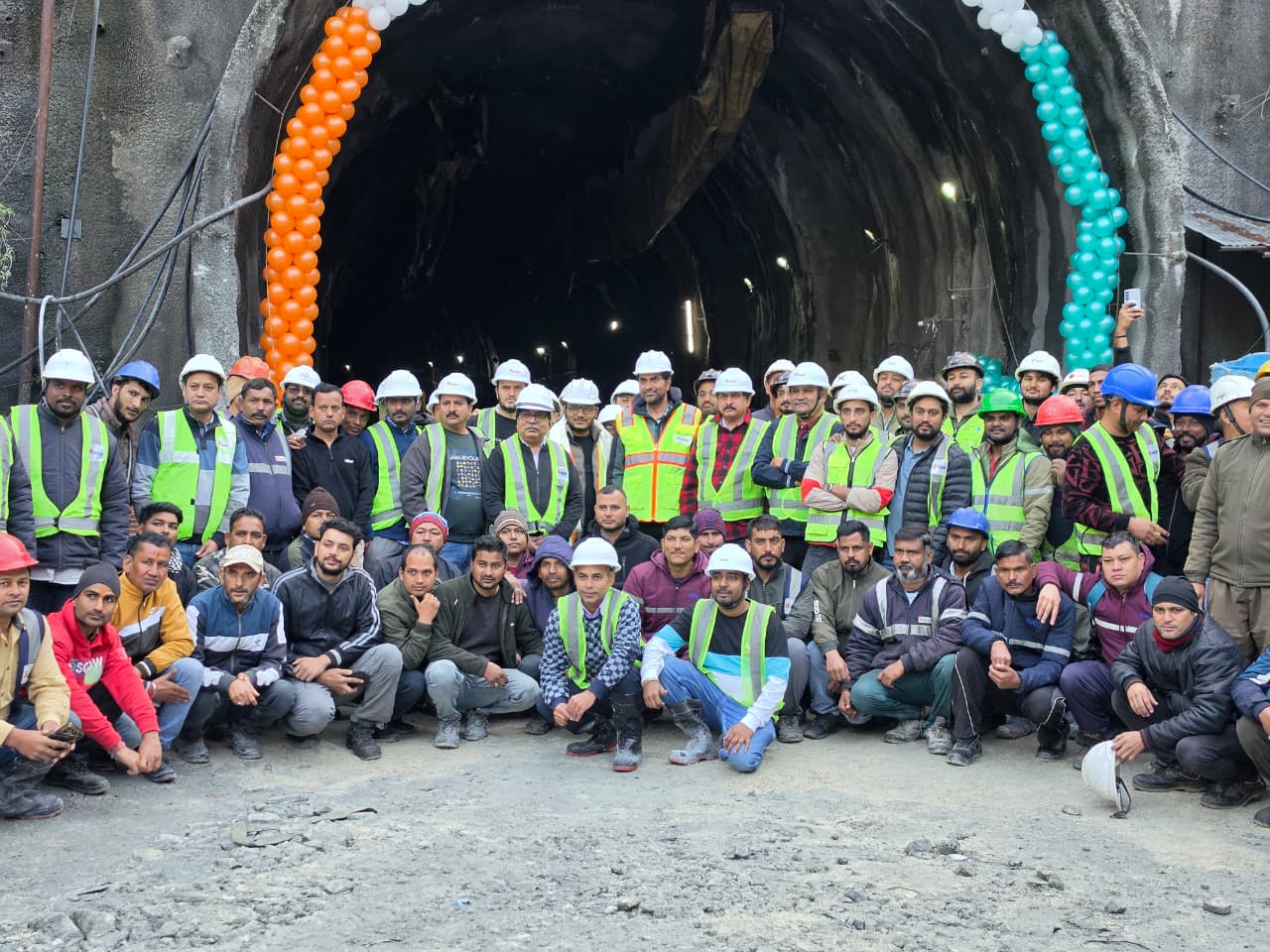
To minimise the impact of construction activities on surrounding communities, controlled blasting was conducted strictly during daytime hours near both tunnel portals.
Ventilation was another critical requirement, particularly during the 4.7-km excavation drive from Portal-1. Specialised ventilation systems were installed to ensure a continuous supply of fresh air and maintain suitable temperature conditions inside the tunnel.
These arrangements were essential for providing a safer working environment for personnel engaged in the underground construction activities.
Boost to Railway Connectivity in Uttarakhand
The breakthrough of Tunnel-14 represents an important step forward for the Rishikesh–Karnaprayag Rail Project, a major railway infrastructure initiative aimed at improving connectivity to the hill regions of Uttarakhand.
Once completed, the project is expected to significantly improve rail access to important destinations in the Himalayan region. It will facilitate the movement of pilgrims and tourists, improve accessibility for local residents and support economic activities across the region.
The railway line is also expected to strengthen transportation infrastructure in areas where difficult terrain and geographical conditions have traditionally made connectivity challenging.
The completion of the main breakthrough in Tunnel-14 demonstrates the engineering efforts involved in executing large-scale railway infrastructure projects in the Himalayan region.
With the two excavated sections now connected, the project has achieved another significant construction milestone. Further work will continue towards completing the tunnel and the remaining infrastructure required for the operationalisation of the Rishikesh–Karnaprayag railway line.
The successful breakthrough on November 27 highlights the progress being made in expanding railway infrastructure in Uttarakhand and bringing the state’s remote Himalayan destinations closer to the national railway network.