Govt brings down indirect tax (GST) to nil on daily use items like Indian breads, namkeens, instant noodles and coffee; most items now attract two rates of 5% and 18%

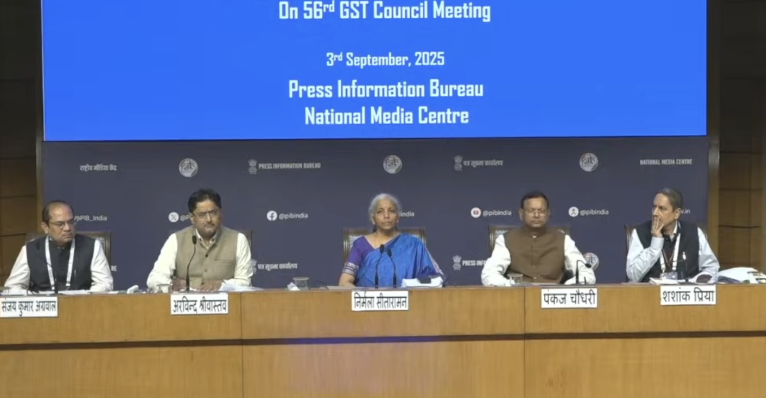
In a pre-Diwali bonanza for a common man, the Government today announced reduction in Goods and Services Tax (GST) on a variety of products bringing it down to 5 per cent or NIL especially on daily use items and food products, a move that would result in higher demand and consumption and leaving more money in the hands of people.
On all Indian breads and other food items like namkeens, bhujia, instant noodles, instant coffee etc the rates have been lowered to zero from existing rates of 5% or 12%, Union Finance Minister Ms Nirmala Sitharaman said after the 56th meeting of the GST Council.
Now there will be only two slabs of 5% and 18% on most of the daily use items for common man along with a special slab of 40% for super luxury items, tobacco and tobacco related products, the Minister said adding the Government has done away with other slabs of 12% and 28%.
The new rates will come into effect from 22nd September, the first day of festival season Navratri, the Minister said. The Council has also given the much discussed and required relief on health-related products like health insurance and life-saving drugs.
According to finance ministry officials there will be revenue loss of about Rs 48,000 crore due to lowering of rates on various items.
Products like air conditioners, large-screen TVs, refrigerators and washing machines, which were taxed at the steepest 28%, will now shift to 18%. Items earlier under the 12% slab will also migrate to 5% or 18%, depending on category.
There was unanimous support from all members of the GST Council on all proposals, the minister said, adding that it was not only rate rationalization but also made structural changes to bring stability in the GST regime.
There are 33 life-saving drugs and medicines where the GST has been reduced from 12% to zero, spectacles and goggles to 5% from 28%. The man-made fibre has been brought to 5% from 18% now and the man-made yard also to 5% from 12 per cent now.
Prime Minister Narendra Modi had announced on Independence day that the Government will announce next generation reforms in the Goods and Services Tax (GST) aiming to reduce burden on the common man on the daily use items.
The GST regime came into effect on July 1, 2017, replacing various existing indirect taxes levied by the Centre and state governments. It aimed to create a “unified” national market for goods and services by subsuming various indirect taxes like excise duty, service tax and Value Added Tax (VAT).