Buddha’s Relics to travel to Russia for an exposition

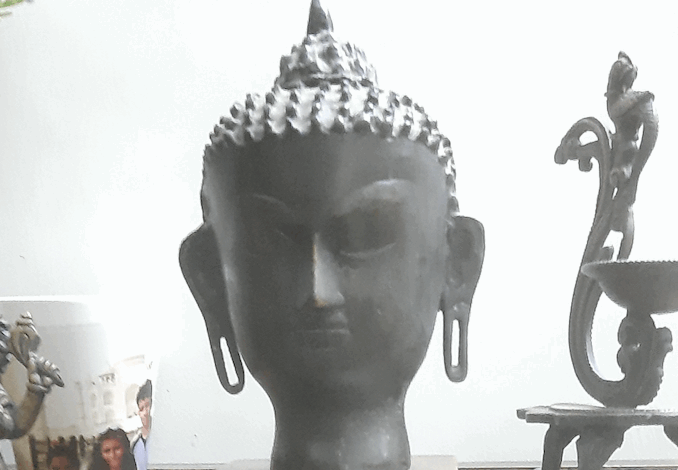
The sacred relics of Buddha from the National Museum, New Delhi will travel to Russia’s Kalmykia Republic for an exposition. It will be accompanied by a high level delegation of Indian and international Monks to bless and enable prayers by the predominantly Buddhist population of the region.
The Union Ministry of Culture, in collaboration with the International Buddhist Confederation (IBC), National Museum, and Indira Gandhi National Centre for the Arts (IGNCA), is organising the exposition in connection with the 3rd International Buddhist Forum to be held in Elista, the capital of Kalmykia Republic, from September 24-28.
The highlight of the forum, themed “Buddhism in the New Millennium,” will be the Shakyamuni’s Sacred Relics from India, four exhibitions organised by IBC and the National Museum, and three special academic lectures. The Relics will be enshrined in the main Buddhist monastery in Elista known as the Geden Sheddup Choikorling Monastery, also called the “Golden Abode of Shakyamuni Buddha.” This is a significant Tibetan Buddhist centre, opened for the public in 1996. It is surrounded by the Kalmyk steppe.
Earlier, a high-level delegation of Monks from Kalmykia had visited India and requested the Minister of Culture and Tourism, Mr Gajendra Singh Sekhawat and the Minister for Parliamentary Affairs, Mr Kiren Rijiju for the sacred Relics of the Buddha to be taken to their hometown for veneration and blessings.
The Holy Relic will be transported from the National Museum by a special Indian Air Force aircraft with great reverence escorted by senior monks with full religious sanctity and protocol.
The high-level delegation will be led by the Deputy Chief Minister of Uttar Pradesh, Mr Keshav Prasad Maurya. The IBC delegation led by the Director General will include H.H. 43rd Sakya Trizin Rinpoche, Head of Sakya Order of Tibetan Buddhism, H.E. 13th Kundeling Taktsak Rinpoche, Drepung Gomang Monastery, H.E. 7th Yongzin Ling Rinpoche and 17 other senior monks. The three senior -most Venerables from India will offer a Blessing session for the local devotees.
The National Museum and the IBC will display three exhibitions of sculpture and art works depicting the “Four Great Events in the Life of the Buddha”, and another one on the sacred legacy of the Shakyas-excavation and exposition of Buddha relics from Piprahwa. The exhibition by the National Museum will showcase “The Art of Stillness – Buddhist Art from its National Collection”. Eminent artist, Shri Vasudev Kamath, will display his works of art at the event.
At the forum that will bring together spiritual leaders and guests from over 35 countries, IBC will also hold a demonstration on an artificial intelligence (AI) chat bot in Russian language, a virtual technology that provides a comprehensive understanding of Buddha Dhamma. It is called Norbu- the Kalyana Mitta, a Spiritual Friend. On the occasion, IBC and the manuscript division of the Ministry of Culture will also present the Holy ‘Kanjur’, the Mongolian religious texts to nine Buddhist Institutes and a University.
Kalmykia is the only Buddhist republic in Europe. It is a region that is characterized by vast grasslands, though it also includes desert areas, and is in the southwestern part of the European territory of Russia, bordering the Caspian Sea.
The Kalmyks are descendants of the Oirat Mongols who migrated from Western Mongolia in the early 17th century. Their history is deeply tied to nomadic lifestyles, which influences their culture. They are the only ethnic group in Europe that practices Mahayana Buddhism.
The holy relics of the Buddha have also been taken to Mongolia, Thailand, and Vietnam in the recent past. The Piprahwa relics at the National Museum were taken to Mongolia in 2022 whereas the holy relics of the Buddha and his two disciples enshrined at Sanchi were taken for exposition to Thailand in 2024. This year in 2025, the holy relics of the Buddha from Sarnath were taken to Vietnam. The relics for Russia are enshrined in the ‘Buddhist Gallery’ of the National Museum in New Delhi for veneration. The holy relics being taken to Kalmykia belong to this same family of relics based in the National Museum.
Earlier, in July, Prime Minister Narendra Modi celebrated the repatriation of the sacred Jewel Relics, one of the most spiritually and archaeologically significant treasures ever discovered of Lord Buddha. India was able to successfully bring back the jewels associated with the Piprahwa relics from Hong Kong where they were being auctioned.
In a message he had said, ” it would make every Indian proud that the sacred Piprahwa relics of Bhagwan Buddha have come home (to India) after 127 long years. These sacred relics highlight India’s close association with Bhagwan Buddha and his noble teachings. It also illustrates our commitment to preserving and protecting different aspects of our glorious culture.”
Buddha belonged to the Shakya clan, whose capital was located at Kapilavastu. During an excavation in 1898, William Claxton Peppe discovered five small vases containing bone fragments, ashes, and jewels in a long-forgotten stupa in Piprahwa, near Birdpur in the Basti district of Uttar Pradesh.
A team led by K.M. Srivastava performed further excavations at the Piprahwa site between 1971 and 1977. It discovered a casket containing fragments of charred bone and dated them to the 4th or 5th century BCE. Based upon the findings of these excavations, the Archaeological Survey of India (ASI) has identified Piprahwa as Kapilavastu.