“World Heart Day Special: Dr. S. N. Khanna on Heart Health and Prevention”

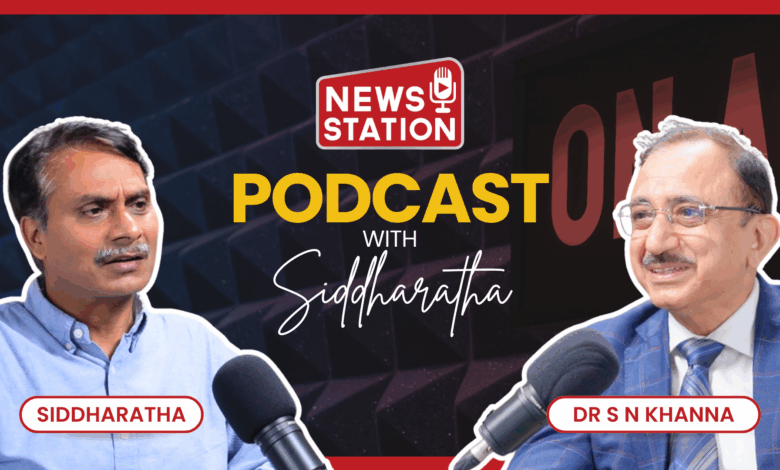
On World Heart Day, NewsStation brings you a special conversation with Dr. S. N. Khanna, Chairperson of Cardiac Surgery at Artemis Hospital, Gurgaon. With over 22,000 heart surgeries to his credit, Dr. Khanna shares vital insights on heart health, prevention, lifestyle, and the rising risk of cardiac diseases.
NEWSSTATION PODCAST – WORLD HEART DAY SPECIAL
Guest: Dr. (Prof.) S. N. Khanna, Chairperson, Cardiac Surgery, Artemis Hospital
Anchor: Siddharatha
Anchor (Siddharatha):
Namaskar and welcome to NewsStation. On this World Heart Day, we bring you a special conversation with one of India’s leading heart specialists. With us in the studio is Dr. S. N. Khanna, Chairperson of Cardiac Surgery at Artemis Hospital, Gurgaon. Dr. Khanna has performed more than 22,000 heart surgeries in his career. Sir, good morning and welcome.
Anchor:
Dr. Khanna, to begin with – we often hear that the heart never rests, that it beats 2.5 billion times in an average lifespan. Why is the heart considered so important, and how should people take care of it?
Dr. Khanna:
That’s right. The heart is the most vital organ because it continuously pumps blood and oxygen to the entire body. If the heart stops, every organ stops. That’s why we say a “happy heart is a healthy heart.” Emotional health also plays a role – stress, depression, and agitation increase the risk of heart attack and stroke.
Anchor:
Many times, we hear about sudden collapses – a person walking normally suddenly falls unconscious. Is that a heart attack or a cardiac arrest? What should be done immediately?
Dr. Khanna:
Very important question. A heart attack and a cardiac arrest are different. In cardiac arrest, the heart stops beating. In the West, even common citizens are trained in CPR and mouth-to-mouth resuscitation, which can save lives. Prevention, however, is equally important: exercise, a balanced diet, and regular health check-ups. Unfortunately, many people don’t even know they have diabetes or high cholesterol until serious damage is done.
Anchor:
You mentioned cholesterol. Could you explain the difference between good cholesterol and bad cholesterol?
Dr. Khanna:
Of course. HDL, or high-density lipoprotein, is the “good” cholesterol that protects the heart. LDL, or low-density lipoprotein, is the “bad” cholesterol that causes blockages. Triglycerides and VLDL also play a role. Diet is key here. We call sugar, refined flour, fried food, and excess salt the “four white poisons.” Avoid them, and instead eat vegetables, fruits, and salads.
Anchor:
Let me share a personal scenario – suppose someone traveling on a train suddenly develops chest pain and sweating. What should they do in such situations?
Dr. Khanna:
That’s not cardiac arrest, but it could be angina or even the onset of a heart attack. If someone is high-risk, they should always carry aspirin and sorbitrate. Taking them immediately can buy crucial time until medical help is available. Remember, in case of a heart attack, the first four hours are the “golden period” – reaching a hospital in that window can prevent permanent damage.
Anchor:
And what if the heart weakens completely – how effective are transplants in India?
Dr. Khanna:
Heart transplantation is an excellent option, but the biggest challenge is availability of donor hearts. The waiting list is very long. In such cases, we also use LVADs (Left Ventricular Assist Devices), which can support patients for 15–20 years until a transplant is possible. As a surgical procedure, transplants are safe and successful if a compatible heart is available.
Anchor:
Sir, recently we’ve seen more young people collapsing due to sudden cardiac arrest. Why is this happening?
Dr. Khanna:
Unfortunately, India has become the “heart attack capital of the world.” And the saddest part is – these are 99% preventable. The main culprits are lifestyle-related: lack of exercise, sedentary jobs, junk food, stress, and smoking. Even young women, who earlier were protected by hormones until menopause, are now at risk. Stress, especially, is a silent killer for both the heart and the brain.
Anchor:
What’s your message to people on World Heart Day?
Dr. Khanna:
Four things: exercise daily in any form, maintain a balanced diet, keep your mind stress-free, and go for regular check-ups. Think of it like the four legs of a chair – if one leg is weak, the chair won’t stand. Similarly, heart health needs balance in all four areas.
Anchor:
Dr. Khanna, before we close, tell us about your own journey. How did you get into this field?
Dr. Khanna:
My father, Prof. M. N. Khanna, was among the pioneers of open-heart surgery in Northern India. Watching him inspired me from childhood. I trained in Lucknow, Vellore, and Mumbai, and later worked in Delhi for many years before joining Artemis Hospital. Over my career, I’ve performed more than 22,000 surgeries, and each case is a reminder that while doctors operate, there is always a higher force at work.
Anchor (Siddharatha):
Thank you, Dr. Khanna, for this enlightening conversation. On World Heart Day, your message is clear: prevention, awareness, and lifestyle management are the keys to a healthy heart.