Tragic Collision: Sairang-New Delhi Rajdhani Express Hits Elephant Herd in Assam, Killing Eight Elephants; Train Derails, No Human Casualties


In a heartbreaking incident highlighting the growing conflict between wildlife and infrastructure in India’s northeastern forests, the Sairang-New Delhi Rajdhani Express (Train No. 20507 DN) collided with a herd of elephants early Saturday morning, resulting in the deaths of eight elephants and the injury of one calf. The powerful impact derailed the train’s locomotive and five coaches, disrupting rail services across the region. Fortunately, no passengers or railway staff sustained injuries or fatalities.
The accident occurred around 2:17 am in the Jamunamukh-Kampur section under the Lumding Division of Northeast Frontier (N.F.) Railway, specifically in the Changjurai area of Assam’s Hojai district (bordering Nagaon). The site is approximately 126 km from Guwahati. According to Nagaon Divisional Forest Officer Suhash Kadam, who rushed to the scene with his team, the herd was crossing the tracks when the high-speed train struck them. Forest officials confirmed eight elephants killed on the spot, with one injured calf receiving immediate medical attention.
N.F. Railway Chief Public Relations Officer Kapinjal Kishore Sharma stated that the loco pilot spotted the herd on the tracks and promptly applied emergency brakes. Despite this, the elephants dashed into the moving train, leading to the unavoidable collision. Officials emphasized that the location is not a designated elephant corridor, though elephant movement in the area’s forested zones is not uncommon.
Senior railway authorities, including the General Manager of N.F. Railway and the Divisional Railway Manager of Lumding, arrived at the site to supervise operations. Accident relief trains and divisional teams were deployed immediately. Passengers from the derailed coaches were safely shifted to vacant berths in the remaining coaches. After detaching the affected portions, the train—with its passengers—departed for Guwahati at 6:11 am. Upon reaching Guwahati, additional coaches will be attached to accommodate everyone comfortably before the Rajdhani resumes its journey to Anand Vihar Terminal in New Delhi.
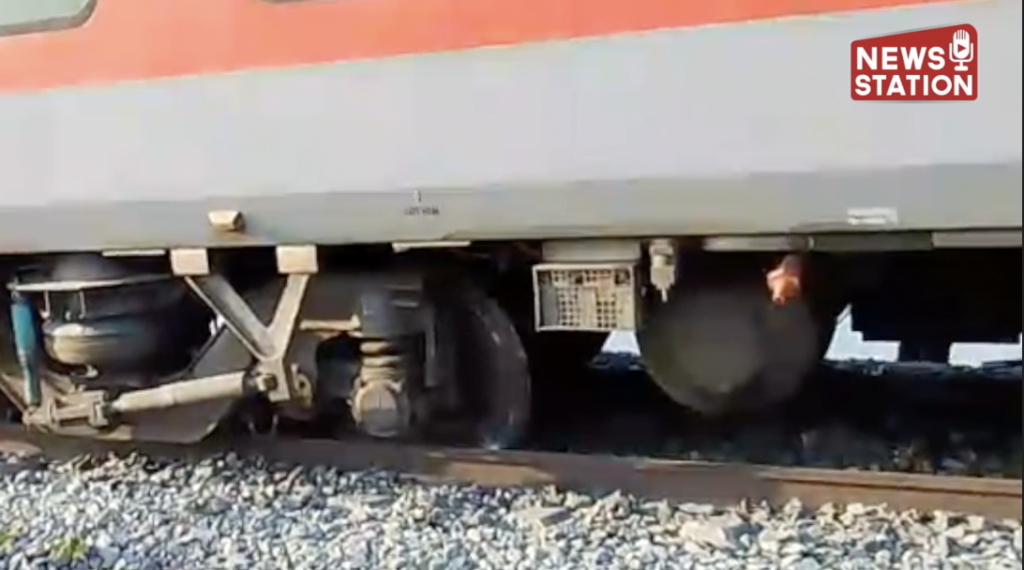
The derailment and scattered remains on the tracks severely impacted rail traffic to Upper Assam and other parts of the Northeast. Several trains have been cancelled or diverted via the UP line. Restoration work is progressing rapidly, with officials aiming for quick normalization.
Helpline numbers activated at Guwahati railway station for passenger queries and assistance: 0361-2731621, 0361-2731622, and 0361-2731623.
This incident underscores the persistent challenge of human-wildlife conflict in Assam, home to a significant elephant population. Over the years, numerous train-elephant collisions have occurred in the state’s rail networks passing through forested areas, prompting calls for enhanced mitigation measures. Experts and conservationists advocate for technologies like infrared sensors, beehive fences, underpasses, and speed restrictions in sensitive zones to prevent such tragedies. The Railways and Forest Department have collaborated on elephant corridors in the past, but incidents outside marked areas like this one highlight the need for broader strategies.
Wildlife activists expressed grief over the loss, noting that elephants are India’s national heritage animal and play a crucial ecological role. “These gentle giants are losing their lives due to encroachment on their habitats,” said one conservationist. Railway Minister Ashwini Vaishnaw is likely to review the matter, as similar past events have led to policy discussions.
As restoration continues and investigations proceed into the exact circumstances, this tragedy serves as a stark reminder of the delicate balance required between development and conservation in biodiversity-rich regions like Assam.