Massive Rail Investments Fuel Indian Industry Boom: AHIL Director Highlights Make in India Gains

As Indian Railways undergoes a transformative overhaul with billions poured into infrastructure, a spotlight shines on how these mega-projects are supercharging domestic manufacturing and creating jobs. In an exclusive interview with Newsstation, Neha Singh, Director of And Hightech Industries Ltd (AHIL), revealed how the sector’s rapid expansion—from track tripling and fourth-line additions to the completion of landmark projects like the Udhampur-Srinagar-Baramulla Rail Link (USBRL) and Mizoram railway—has delivered tangible benefits to Indian firms.
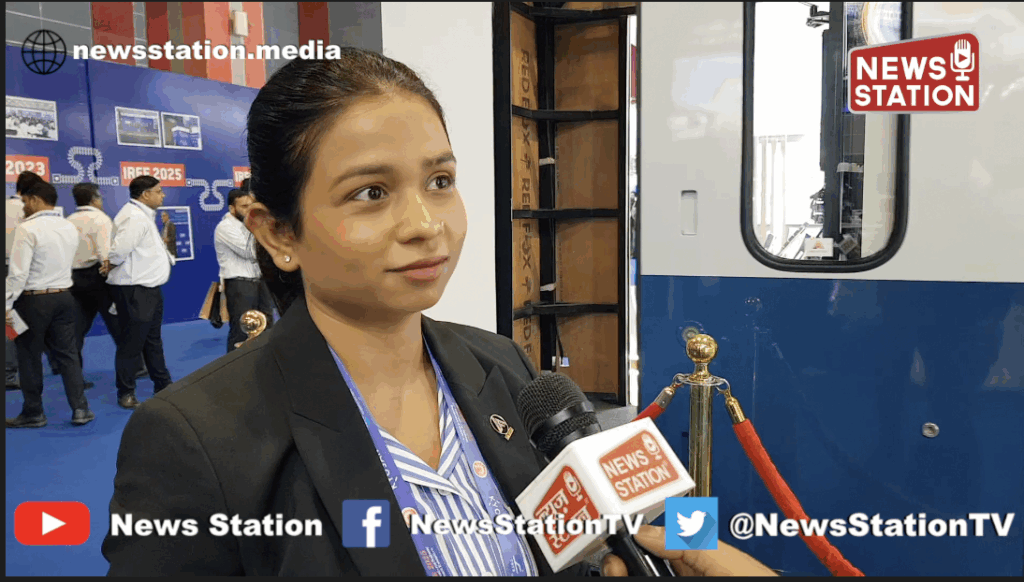
“These large-scale projects and investments have brought a significant boost to the industry,” Singh said, emphasizing the ripple effects. “We’re seeing revolutionary changes everywhere, from dedicated freight corridors to preparations for Sikkim’s rail connectivity. It’s not just about tracks; it’s about building an ecosystem that empowers local players.”
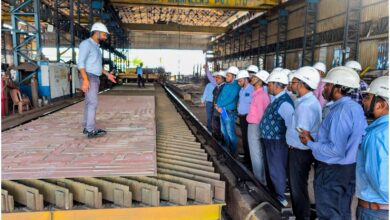
Established in 2013, AHIL has carved a niche in precision manufacturing for railway rolling stock, specializing in high-quality components like casting friction discs, brake pads, door systems, and HVAC systems supplied to LHB coaches, Vande Bharat trains, and the Delhi Metro. Based in Greater Noida’s Kanak Ecotech One, the company showcased its full product lineup at a recent Indian Railways display, underscoring its commitment to engineering excellence, customer satisfaction, and timely delivery.
Singh attributed much of AHIL’s growth to post-2014 reforms, particularly the Make in India initiative. “The changes are absolutely visible,” she noted. “All our R&D is in-house, with every product fully localized in India. What could be a bigger shift? Now, everything we supply to Indian Railways is 100% Make in India.”
Quality remains non-negotiable, aligning with recent directives from Rail Minister Ashwini Vaishnaw. During a recent inauguration, he urged the Railway Board to prioritize uncompromising standards, blacklisting any defaulters and enforcing strict accountability. “Quality-wise, it’s spot on,” Singh affirmed. “We’re manufacturing under Make in India for passenger-related coaches like LHB, Vande Bharat, and Delhi Metro—there’s zero scope for compromise. For us and all such companies, quality is the top priority: There should be no compromise at all.”
Addressing long-standing industry gripes about bureaucratic red tape, Singh painted an optimistic picture of eased operations. “Things have become completely smooth,” she said. “Everything is standard-based and online. The Rail Minister addressed us directly, instructing strict but agent-free inspections. Bureaucracy plays no role here—if you’re confident in your product, there’s no tension at all. Ease of doing business is a reality now.”
Looking ahead to India’s 2047 vision of a developed nation, Singh urged greater focus on R&D and emerging technologies. “Companies like ours can bring so much new tech to Indian Railways,” she suggested. AHIL is already innovating, with its latest effort centered on a fully indigenous door system. “We’re in the R&D stage—design is complete, and we’ll soon start registration,” Singh revealed. “This will be 100% Make in India, unlike anything else on the market. No other company is doing doors this way yet. You’ll see it soon in Train 18 and DMRC Delhi Metro services.”
On costs in a price-sensitive market, Singh remained diplomatic: “It’s about your own cost controls and optimization levels. We focus on delivering value without cutting corners.”
Host Siddharatha wrapped the conversation on a high note, highlighting how such firms are thriving in an expanding market. “Earlier, it was tough because the ecosystem wasn’t scaled up,” he observed. “Now, with high-speed routes and other lines transforming, the benefits are clear—for India, its industries, and employment. When these companies ramp up, jobs follow.”
AHIL’s story exemplifies the broader rail renaissance: a network poised to carry 8 billion passengers annually by 2030, driving self-reliance and economic growth. As investments continue—₹2.5 lakh crore budgeted for 2025-26—the sector promises a brighter, faster future for millions.