India Braces for Heavy Rainfall as Monsoon Intensifies: IMD Forecast for Sept 4-17, 2025

The India Meteorological Department (IMD) has issued a detailed weather update and extended forecast, highlighting active monsoon conditions across the country, with heavy to extremely heavy rainfall expected in several regions over the next two weeks (September 4-17, 2025). The past week saw significant weather events, including landslides, flash floods, and cloudbursts, with the monsoon delivering 48% more rainfall than the long-term average.
Key Weather Highlights from August 28 to September 3, 2025
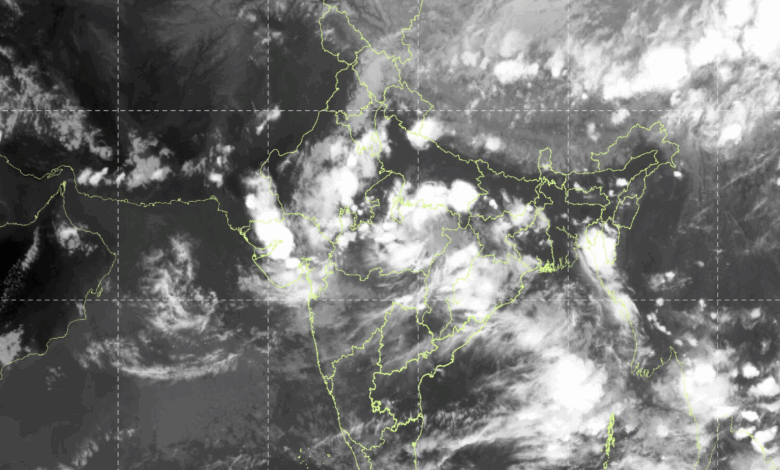
The IMD reported vigorous monsoon activity in the week ending September 3, driven by the interaction of moisture-laden monsoon winds with a stationary western disturbance over northern Pakistan, Punjab, and Kashmir. This led to:- Heavy to Extremely Heavy Rainfall: Western Himalayan states like Himachal Pradesh, Uttarakhand, and Jammu-Kashmir experienced prolonged heavy rainfall, triggering landslides and flash floods. Punjab and Haryana also faced severe flooding due to a cyclonic circulation over northeast Rajasthan, with isolated extremely heavy rainfall recorded from August 31 to September 3.
Regional Impacts : Telangana recorded an exceptional 41 cm of rainfall in Kamareddy on August 28, while Chhattisgarh, Marathawada, and Odisha saw extremely heavy rainfall due to a slow-moving low-pressure system over the northwest Bay of Bengal. A cloudburst hit Manali and parts of Chennai on August 30, causing significant disruptions.
National Rainfall Surplus : The all-India weekly rainfall was 48% above the long-period average, with northwest India seeing a staggering 182% surplus. The monsoon season (June 1 to September 3) has recorded an 8% surplus nationwide.
Two-Week Forecast: September 4-17, 2025
The IMD forecasts continued monsoon activity, with significant rainfall expected across multiple regions due to several weather systems, including a low-pressure area over Chhattisgarh and East Madhya Pradesh, a trough from the Arabian Sea to the Bay of Bengal, and a western disturbance influencing northwest India.
Week 1 (September 4-10, 2025):
West India : Extremely heavy rainfall is likely in Gujarat, Saurashtra, and Kutch from September 4-7, with very heavy rainfall in Konkan, Goa, and Madhya Maharashtra. Thunderstorms and lightning are expected across the region for the next five days.
Northwest India : Isolated heavy rainfall is forecast for Uttarakhand, Rajasthan, Punjab, Haryana, and Chandigarh, with very heavy rainfall in West and East Rajasthan from September 4-7. Light to moderate rainfall with thunderstorms is likely for the next seven days.
East & Central India : Heavy rainfall is expected in West Madhya Pradesh, Vidarbha, Chhattisgarh, and Odisha on September 4-5, with very heavy rainfall in West Madhya Pradesh. Sub-Himalayan West Bengal, Sikkim, and Bihar may see heavy rain later in the week.
Northeast India : Assam, Meghalaya, Arunachal Pradesh, and other northeastern states are likely to experience isolated heavy rainfall from September 4-10, accompanied by thunderstorms.
South Peninsular India : Kerala and Tamil Nadu may see isolated heavy rainfall, with strong surface winds (30-40 kmph) over Coastal Andhra Pradesh and Rayalaseema.
Week 2 (September 11-17, 2025):
Monsoon Trough Shift : The monsoon trough is expected to move near or north of its normal position, supporting widespread rainfall in east and northeast India, particularly in Bihar, Sub-Himalayan West Bengal, and Assam.
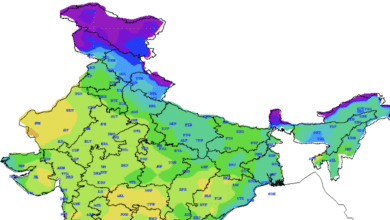
Rainfall Distribution : Fairly widespread rainfall with isolated heavy to very heavy falls is likely in northeast and east India. Central India may see normal rainfall, while northwest India is expected to experience below-normal rainfall.
Temperature Outlook : Maximum temperatures will remain near or below normal across most of India, except in parts of east and northeast India, where they may be slightly above normal by about 2°C in Week 1. Temperatures are expected to normalize in Week 2.
Climate Context
The IMD notes that neutral El Niño-Southern Oscillation (ENSO) conditions currently prevail, with forecasts suggesting a potential shift to La Niña conditions post-monsoon. Neutral Indian Ocean Dipole (IOD) conditions are also in place, with a likelihood of weak negative IOD developing toward the end of the monsoon season. The Madden-Julian Oscillation (MJO) is expected to enhance convective activity over the Arabian Sea until mid-September.
Temperature Extremes
The highest maximum temperature last week was 40.5°C in Madurai, Tamil Nadu (August 29), while the lowest minimum was 15.2°C in T.B.I.A., Maharashtra (September 3). Maximum temperatures in Week 1 are markedly above normal (>5°C) in parts of Arunachal Pradesh, Assam, and Odisha, but near or below normal elsewhere.
IMD’s Advisory
The IMD urges residents in affected areas to stay vigilant, particularly in regions prone to landslides and flash floods. Authorities are advised to monitor flood conditions in Punjab, Haryana, and the Western Himalayan states. For detailed regional forecasts, refer to IMD’s official updates at [www.imd.gov.in](https://www.imd.gov.in).
This intensified monsoon activity underscores the need for preparedness as India navigates the peak of the 2025 monsoon season.