
Railways Deploy Advanced Technology to Prevent Elephant Accidents on Guwahati–Howrah Route: Ashwini Vaishnaw

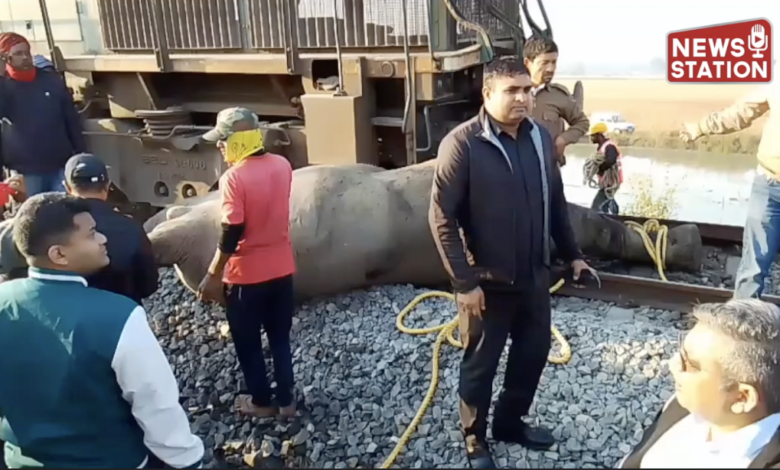
Railway Minister Ashwini Vaishnaw briefed the media on Indian Railways’ intensified efforts to prevent elephant and wildlife accidents, particularly along sensitive routes such as the Guwahati–Howrah corridor, which passes through key elephant habitats. The briefing came alongside the announcement of the first Vande Bharat Sleeper train on this route.
Emphasising that wildlife protection is a major priority for the Railways, the Minister said special focus has been placed on safeguarding elephants, which are frequently affected in forest and corridor areas. He said Indian Railways has successfully piloted and proven an advanced technology that has shown highly effective results.
Under this system, an optical fibre cable is laid along the railway track. When an elephant moves within about 200 metres of the track, vibrations caused by its footsteps travel through the ground, sometimes up to 300–350 metres depending on terrain. These vibrations create a detectable deflection in the optical fibre signal, producing pulse patterns similar to an ECG waveform.
“These signals are detected in microseconds. In less than a second, the control room is alerted, and within another second the loco pilot receives a clear warning,” the Minister explained. This allows the driver to immediately become alert, control speed and take preventive action. Vaishnaw said that on sections where this system has already been installed, elephant accidents have reduced to zero.
He added that the system is integrated with a dedicated optical fibre control room, ensuring automatic and instant communication with train crews.
The Minister also revealed that Indian Railways is working on an additional layer of protection using AI-based cameras. These cameras, currently under development, will be capable of detecting animals from up to 500 metres away, even in complete darkness. The AI camera system is expected to be launched within the next 10 months, around October.
Once operational, alerts from the AI cameras will work alongside signals from the optical fibre system, giving loco pilots precise and focused information about the presence of elephants or other wildlife such as tigers near the track.
“With this combined approach, wildlife protection on railway tracks will be close to 100 percent,” Vaishnaw said, calling it a major objective and a significant commitment of Indian Railways towards conservation alongside modernisation.