Meghalaya’s First-Ever Block-Level Climate Study Reveals Alarming Results: 25 out of 39 Blocks Highly Vulnerable

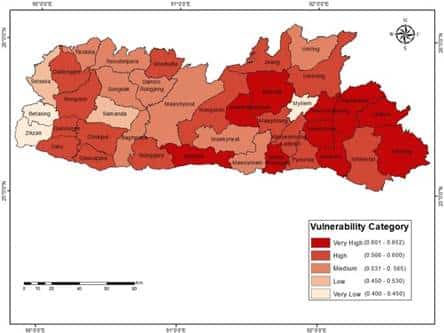
A landmark climate vulnerability assessment conducted across all 39 rural blocks of Meghalaya has found that 25 blocks (nearly 64%) fall under “High” or “Very High” climate vulnerability categories. This is the first time such a detailed block-level study has been carried out in the state.
The study was led by the Meghalaya Climate Change Centre (MCCC) under the National Mission for Sustaining the Himalayan Ecosystem (NMSHE), a key programme of the Government of India’s National Action Plan on Climate Change (NAPCC).
Key Findings at a Glance
- Total blocks studied: 39 (Community & Rural Development Blocks)
- Very High & High Vulnerability: 25 blocks
- Moderate & Low Vulnerability: 14 blocks
Main Reasons for High Vulnerability
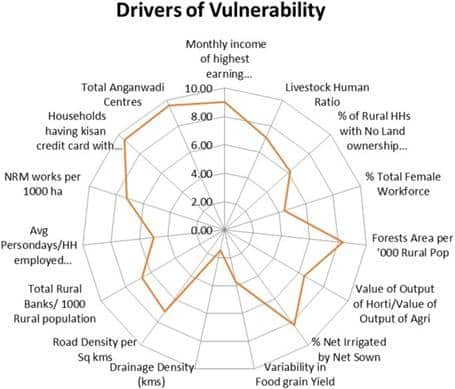
The assessment combined both environmental and socio-economic factors. The biggest challenges identified are:
- Very low access to bank credit and loans for farmers and families
- Low household income levels
- Poor public health and nutrition facilities (few functional Anganwadi centres)
- Limited irrigation – most farming depends on rainfall
- Depleting forest cover and scarce natural resources
Why This Study Matters
- Earlier studies were done only at the district level and missed local differences.
- This block-level report gives pinpointed information so the government can plan exact solutions for each vulnerable area.
- It will help design better climate-resilient farming, water management, health services, and livelihood programmes.
What Happens Next?
The report provides clear guidance to Meghalaya policymakers for:
- Targeted funding and schemes in the 25 most vulnerable blocks
- Strengthening rural infrastructure (health centres, irrigation, credit access)
- Protecting forests and promoting climate-smart agriculture
- Building a stronger, more resilient Himalayan ecosystem
The Meghalaya Climate Change Centre stated, “These findings will guide grassroots-level climate action and help the state move towards sustainable and inclusive development in the face of climate change.”
This study is part of a nationwide effort supported by the Department of Science and Technology (DST), Government of India, which has set up State Climate Change Cells in 30 states and union territories.
Meghalaya now has scientific evidence to protect its most climate-vulnerable communities first.