Indian Railways Clears Major Infrastructure Projects in UP, Rajasthan, and MP to Boost Capacity and Connectivity

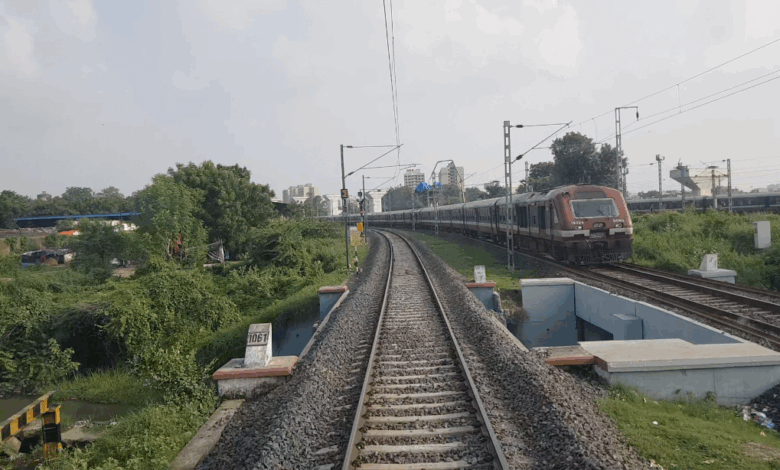
In a significant move to strengthen rail infrastructure and regional connectivity, Indian Railways has approved a series of key projects across Uttar Pradesh, Rajasthan, and Madhya Pradesh. Announced on February 12, 2026, the projects include construction of a third line, doubling of an existing route, and development of a strategic bypass line. These initiatives aim to enhance operational efficiency, improve safety, reduce travel time, and support economic growth while benefiting millions of passengers and freight users.
Third Line Between Aunrihar and Varanasi City in Uttar Pradesh
Indian Railways has sanctioned ₹497.07 crore for the construction of a dedicated third line between Aunrihar and Varanasi City, spanning 31.36 km under the North Eastern Railway zone. This section is one of the busiest corridors in eastern Uttar Pradesh, handling substantial passenger and freight traffic.
The route plays a vital role in transporting essential commodities such as cement, coal, food grains, iron, steel, and other industrial materials. With rising demand, the existing double line has been operating close to saturation, with current utilization at 87.93 percent.
The addition of the third line will allow operation of 7.13 additional trains in each direction daily and accommodate freight growth of 1.99 million tonnes per annum (MTPA). Once completed, the line capacity is expected to increase to over 102 percent, easing congestion and significantly improving punctuality. The project is also expected to enhance logistics efficiency for industries in eastern Uttar Pradesh and adjoining regions, strengthening trade corridors and supporting local economic development.
Doubling of Ringas–Sikar Rail Line in Rajasthan
In Rajasthan, Indian Railways has approved the doubling of the 50.06 km Ringas–Sikar section at a cost of ₹470.34 crore under North Western Railway. The route is a crucial regional link serving both passenger and freight traffic.
The doubling project will enable five additional trains per direction daily and facilitate freight growth of 2.36 MTPA. Improved line capacity will enhance reliability, reduce delays, and increase permissible speeds for both passenger and goods trains.
The section is particularly important for connectivity to key pilgrimage destinations such as Khatu Shyamji and Salasar Balaji, as well as industrial and commercial hubs in the region. Currently operating at around 77 percent utilization, the corridor is projected to witness significant growth, with demand expected to push capacity utilization up to 210 percent by 2029–30.
With the doubling in place, the network will be better equipped to handle future traffic growth. For local commuters, the project promises more punctual services and reduced waiting times. For businesses and traders, improved freight movement will translate into faster goods transport, lower logistics costs, and greater economic activity in the region.
Ujjain Bypass Line in Madhya Pradesh
Indian Railways has also approved the construction of an 8.60 km Ujjain bypass line connecting Naikheri and Chintaman Ganesh in Madhya Pradesh at a cost of ₹189.04 crore under Western Railway.
Currently, several trains require reversal at Ujjain Junction, leading to delays and reduced sectional capacity. The new bypass line will eliminate the need for such reversals, ensuring smoother and faster train operations.
The project holds particular significance in view of the upcoming Simhastha Kumbh Mela in 2028, which is expected to draw lakhs of devotees to Ujjain, home to the revered Mahakaleshwar Jyotirlinga. By facilitating seamless train movements, the bypass will enhance the railway’s ability to manage heavy passenger flows during peak pilgrimage seasons.
Beyond festival traffic, the project will benefit daily commuters, long-distance travelers, and freight services by improving timetable reliability and reducing operational bottlenecks. Enhanced sectional capacity will also help meet future growth in passenger and goods traffic.
Strengthening a Citizen-Centric Rail Network
Collectively, these projects underscore Indian Railways’ commitment to inclusive and sustainable transport development. By expanding capacity, removing operational constraints, and improving reliability, the initiatives aim to bridge connectivity gaps and create a more efficient and resilient rail network.
With investments spanning three key states, the approved works are expected to drive regional growth, facilitate smoother mobility, and reinforce Indian Railways’ vision of building a modern, high-capacity, and citizen-centric transportation system.