Indian Railways Accelerates AI-Based Wildlife Protection System After Tragic Rajdhani Express Elephant Collision in Assam

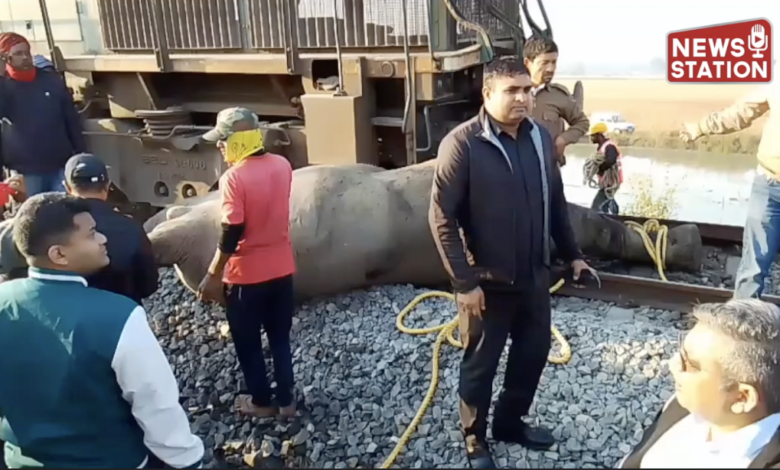
In the wake of the heartbreaking accident where the Sairang-New Delhi Rajdhani Express collided with a herd of elephants in Assam’s Hojai district on December 20, claiming the lives of eight elephants (including a calf that later succumbed to injuries), Indian Railways is intensifying its deployment of an advanced Artificial Intelligence-enabled Intrusion Detection System (IDS) to prevent such tragedies.
The AI-powered system, known as ‘Gajraj’ and utilizing Distributed Acoustic Sensing (DAS) technology, has already been successfully implemented across 141 route kilometers (RKms) in the Northeast Frontier Railway (NFR) zone – a region particularly vulnerable to elephant-train collisions.
Based on its proven performance in alerting authorities and preventing incidents, tenders have been awarded for an additional 981 RKms, expanding the total protected coverage to 1,122 RKms across the country.
How the ‘Gajraj’ AI System Works
- The technology detects vibrations caused by elephant movement near railway tracks using fiber optic cables.
- It generates real-time alerts to loco pilots, station masters, and control rooms when wild animals – including elephants, lions, and tigers – are in proximity.
- AI-based cameras provide advance warnings up to 0.5 kilometers ahead, allowing drivers to slow down or stop trains in time.
This expansion comes as a direct response to ongoing wildlife casualties on tracks, with the recent Assam incident highlighting the urgent need for proactive measures. The collision, which occurred in a non-designated elephant corridor amid low visibility, derailed the train’s engine and five coaches but fortunately caused no human injuries.
Indian Railways has long prioritized technology-driven solutions for wildlife conservation, including speed restrictions in corridors and coordination with forest departments. The scaled-up ‘Gajraj’ system underscores the national transporter’s renewed commitment to balancing safe rail operations with the protection of India’s precious biodiversity, especially in elephant-prone states like Assam, Odisha, and West Bengal.
Environmental experts have welcomed the move, noting that such AI interventions could significantly reduce the average 20 annual elephant deaths from train hits, fostering safer coexistence between infrastructure development and wildlife habitats.