


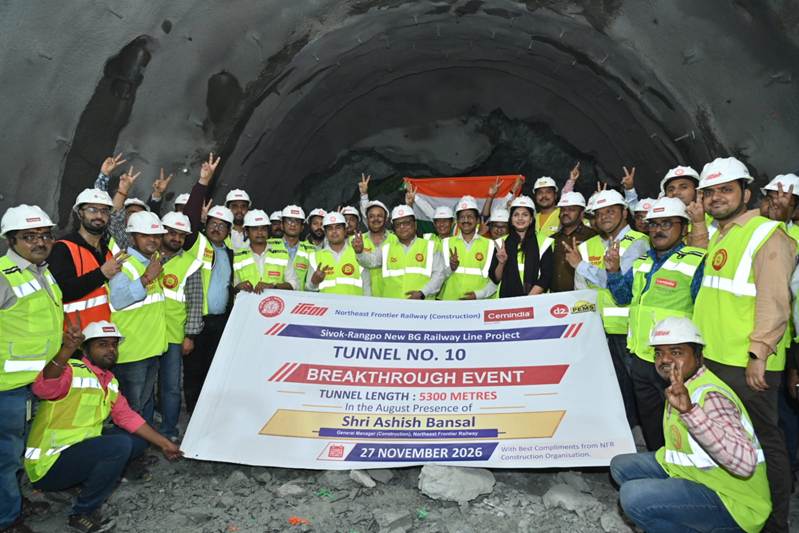
Indian Railways has achieved a major construction milestone in the ambitious Sivok-Rangpo New Railway Line Project, with the successful completion of excavation work in Tunnel No. 10, the longest tunnel on the entire route. The breakthrough was achieved on November 27, 2026, marking the completion of excavation in all 14 tunnels of the 45-km-long railway project.
The development represents a significant step towards providing Sikkim with its first railway connection to the national railway network. The project is being constructed through the challenging Himalayan terrain of West Bengal and Sikkim and is considered an important infrastructure initiative for improving connectivity in the Northeast.
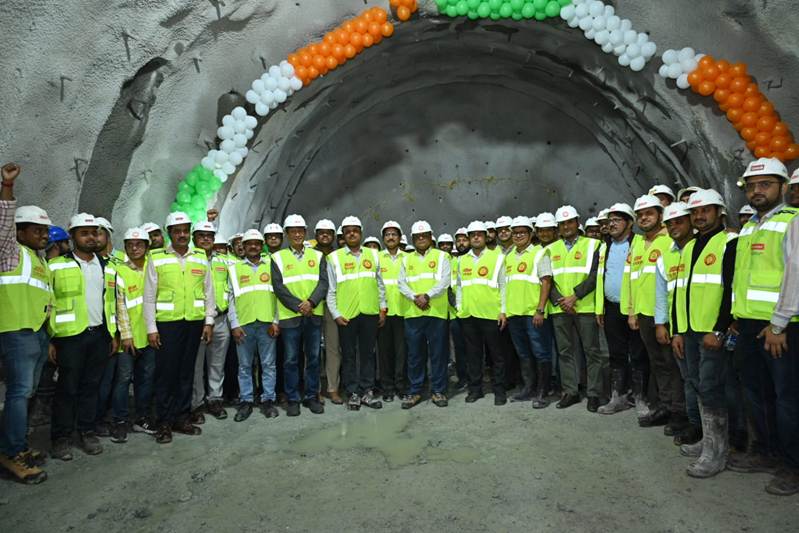
5.3-km Tunnel No. 10 Achieves Major Breakthrough
Tunnel No. 10, measuring approximately 5.3 kilometres, is the longest of the 14 tunnels being constructed under the Sivok-Rangpo railway project.
Excavation work in this tunnel was carried out using multiple access points. The construction teams worked from both ends of the main tunnel and through two additional access tunnels to advance the excavation process.
With the excavation fronts successfully meeting on November 27, the entire length of Tunnel No. 10 has now been excavated, completing a major engineering challenge in the project.
Following the breakthrough, attention will shift towards the remaining construction and railway infrastructure activities. These include tunnel lining, track laying and installation of essential railway safety systems.
The completion of excavation in all 14 tunnels is an important achievement, considering the difficult geological conditions and mountainous landscape through which the railway line passes.
45-km Railway Line Through Himalayan Mountains
The Sivok-Rangpo New Broad Gauge Railway Line is approximately 45 kilometres long and passes through Darjeeling and Kalimpong districts of West Bengal and Pakyong district of Sikkim.
The project involves extensive tunnelling and bridge construction to negotiate the difficult Himalayan geography.
One of its most notable engineering features is that tunnels account for approximately 86 per cent of the total railway route length. The project includes 14 tunnels and 23 bridges, making it a highly tunnel-intensive railway infrastructure development.
The railway line is designed to connect the mountainous region with the existing railway network while overcoming geographical barriers that have traditionally made transportation difficult in the region.
Five Stations to Provide Railway Access
The Sivok-Rangpo railway project will serve five locations through four stations and one underground halt.
The proposed stations and halt include:
| Station/Halt | Location |
|---|---|
| Sivok | West Bengal |
| Riyang | West Bengal |
| Melli | West Bengal–Sikkim region |
| Teesta Bazaar | Underground halt |
| Rangpo | Sikkim |
At Sivok, the new railway line will connect with the existing New Jalpaiguri-Alipurduar railway route. This connection will integrate the new line with India’s broader railway network and provide a direct railway corridor towards Sikkim.
Rangpo will serve as an important railway gateway for Sikkim, significantly improving access to the state.
Boost to Tourism, Trade and Regional Development
The completion of tunnel excavation brings the project closer to its operational stage. Once commissioned, the railway line is expected to transform transportation in Sikkim and adjoining areas.
At present, road transportation plays a major role in connecting Sikkim with the rest of the country. The railway link will provide residents and tourists with an additional transportation option, offering a safer, faster and more reliable alternative to travel through National Highway 10.
Tourism is expected to be among the major beneficiaries. Sikkim attracts visitors throughout the year because of its Himalayan landscapes, monasteries, adventure tourism destinations and natural attractions. Direct railway connectivity is expected to improve accessibility and support the growth of tourism-related businesses.
The railway connection will also facilitate the movement of essential commodities and improve logistics for local businesses. Better connectivity with major markets could support regional trade, economic activity and employment opportunities.
For residents, the new railway line is expected to provide improved mobility and greater access to important economic and social centres.
A Major Step Towards Sikkim’s Railway Connectivity
The breakthrough in Tunnel No. 10 and completion of excavation in all 14 tunnels represent a major achievement in the Sivok-Rangpo railway project.
However, excavation completion does not mean that the railway line is ready for operations. Tunnel lining, track installation, safety systems and other essential infrastructure works remain to be completed.
With the most extensive tunnelling component reaching an important milestone, Indian Railways has moved closer to fulfilling a long-awaited infrastructure goal: bringing Sikkim onto India’s railway map.
The project is expected to strengthen regional connectivity, support tourism and trade, and provide a new transportation lifeline to the Himalayan state.