Revolutionizing Rail Safety: CRIS Unveils Bridge and Tunnel Management System in Exclusive Interview

As Indian Railways powers through an unprecedented infrastructure boom, with sprawling projects featuring hundreds of tunnels snaking through challenging terrains, a groundbreaking digital tool is set to transform how the network safeguards its vital bridges and tunnels. In an exclusive conversation with Newsstation.media, Siddharatha, the station’s Editor, sat down with Dilip Kumar Jain, Principal Project Engineer at the Centre for Railway Information Systems (CRIS), to demystify the Bridge and Tunnel Management System (BMS/TuMS)—a cutting-edge IT solution designed to monitor remote assets in real-time, ensuring passenger safety amid the world’s fourth-largest rail network spanning over 100,000 km.
Jain, speaking candidly about the system’s inception and impact, emphasized the sheer scale of the challenge. “Our Indian Railways network is the fourth largest globally, traversing unstable Himalayan terrains, rivers, and mountains. Passenger safety is non-negotiable—it’s the top priority for our Rail Minister and the Chairman of the Railway Board,” he said. With the Indian Railways’ safety theme this year laser-focused on prevention, BMS/TuMS emerges as a game-changer, replacing cumbersome manual files with automated alerts and dashboards accessible from a single platform.
At the heart of the system is proactive monitoring for India’s staggering 180,000 bridges—including 38,000 heritage structures from 1986 or earlier—alongside 13,500 tunnels and 4,800 foot-over bridges (FOBs) and road-over bridges (ROBs). Consider the Udhampur-Srinagar-Baramulla Rail Link (USBRL): Over a 111-km stretch from Katra to Banihal, more than 90% of the track plunges through tunnels, demanding vigilant oversight in isolated, high-risk zones where constant human presence is impossible.
From Manual Mayhem to Digital Precision
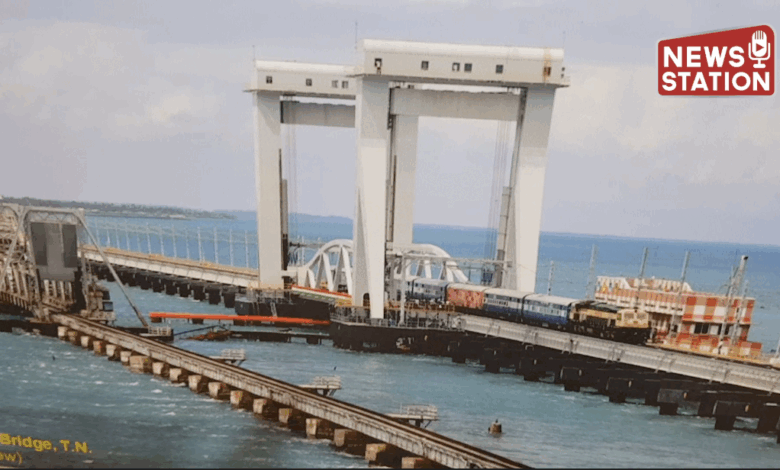
Historically, bridge inspections and maintenance relied on paper trails and phone calls—a recipe for delays and oversights. “Rivers are the biggest threat; if water levels exceed danger thresholds, train operations halt immediately,” Jain explained. Now, IoT sensors trigger instant alerts: A dashboard pings when levels cross the Danger Level (DL), listing affected bridges by unique ID numbers. Click on any—say, the iconic Chenab Bridge, the world’s highest rail arch, or the corrosion-prone Pamban Bridge in a salt-lashed coastal hotspot (the second-most corrosive environment globally)—and a treasure trove of data unfolds: Construction date, builder, last inspection, health status, and overdue maintenance flags.
The system automates workflows end-to-end. “Every bridge has a fixed inspection cycle—say, annually. Due dates are pre-loaded, so the platform auto-notifies engineers without manual checks,” Jain noted. For FOBs, whether iron or concrete, it tracks painting, repairs, and structural integrity. Overdue inspections? A dedicated counter highlights priorities: As of recent data, 98.36% of pre-monsoon tech inspections are complete, with 99.21% of ADEN-level checks done, though 22 bridges report overstressed girders and 4,816 FOBs require repairs (5.88% needing urgent attention).
Underwater inspections and third-party audits feed into 4D-Bridge Information Modelling, powered by IoT devices and cloud integration via CRIS data centers. This ensures 24/7 availability, aligning with Digital India’s thrust. “From the Munger Ganga Bridge to remote Himalayan spans, everything’s visualized on one dashboard—total bridges, tunnels, inspection dues, and even water level monitors at 498 sites (with levels 0-0.5m above normal in some). No more reactive fixes; it’s predictive safety.”
Extending Vigilance to Tracks
BMS/TuMS doesn’t stop at bridges and tunnels—it’s a holistic guardian for tracks too. “The biggest derailment culprit is rail fractures, but now we log every incident to pinpoint high-risk sections,” Jain revealed. The system tallies cumulative load mileage: After a fixed km threshold, it alerts for sleeper, fastener, and rail replacements—much like resurfacing roads. Vendor quality flags pop up if subpar materials are suspected, all traceable with a single click.
Inspections are now auditable: Who conducted it? When? Any lapses? “If a mishap stems from shoddy checks, accountability is fixed—personnel actions follow. This wasn’t possible pre-IT,” Jain added. In a network adding tracks annually across the nation, the system’s data bank pinpoints exact intervention spots, logging repairs and flagging unresolved issues.
A Shield Against the Unseen
Jain underscored the system’s role in averting “small oversights snowballing into major accidents.” With stats showing 11,222 bridges due for tech scrutiny, 9,618 for girder checks, and zero NN-class bridges exceeding DL (non-major with water monitoring), BMS/TuMS optimizes resources: 61% of ADEN inspections complete, 70 ORN-2 bridges (Assistant Divisional Engineer oversight), and full visibility on 15,688 raw/RAT inspections done.
As Railways races toward Vande Bharat expansions and electrification, this CRIS innovation—born from 21st-century IT leaps—promises zero compromise on safety. “Physical and digital interventions must align; we’ve prioritized that,” Jain concluded.
Newsstation.media will continue tracking Railways’ safety strides. For more on CRIS innovations, visit their official portal.