‘Make in India’ Drives Progress on Mumbai–Ahmedabad Bullet Train Project

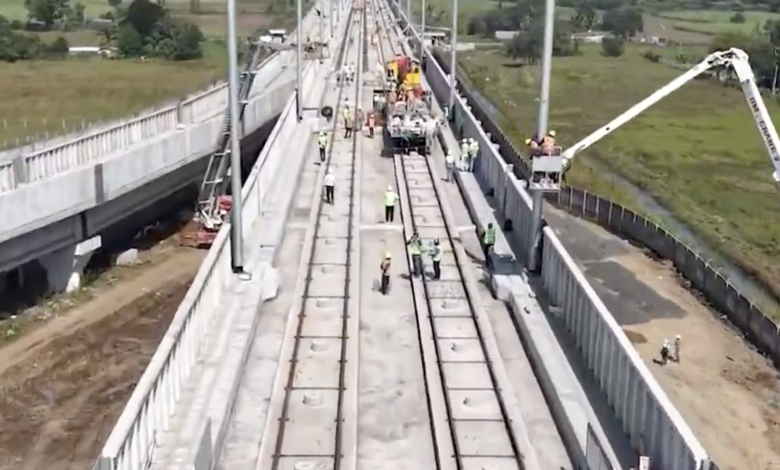
The Mumbai–Ahmedabad Bullet Train project, India’s first high-speed rail initiative, is making significant strides as the installation of Overhead Electrification (OHE) masts progresses steadily along the corridor. Union Minister for Railways, Communications and IT, Ashwini Vaishnaw, highlighted that this development marks a key step in enabling electric traction for the ambitious project, reflecting strong on-ground execution under the ‘Make in India’ initiative.
The OHE mast installation is a critical component of the traction infrastructure, supporting safe, smooth, and efficient high-speed train operations. These vertical steel structures, installed alongside the railway track, hold the overhead electric wires in precise alignment and tension, ensuring a continuous and reliable power supply to trains. This infrastructure is particularly vital for high-speed trains, where even minor disruptions in power can impact performance and safety.
Over 20,000 OHE masts, ranging in height from 9.5 to 14.5 metres, are being erected along the corridor, including on elevated viaducts and key stretches where conventional construction is challenging. These masts will support the 2×25 kV overhead traction power system, which includes overhead wires, earthing arrangements, fittings, and other accessories required for bullet train operations. Alongside this, a network of Traction Substations (TSS) and Distribution Substations (DSS) is being developed to ensure uninterrupted supply of electricity across the corridor.
The project not only brings advanced rail technology to India but also strengthens domestic manufacturing. Many components of the OHE masts and related systems are being produced in India under the ‘Make in India’ initiative, boosting local industry and creating employment opportunities. By integrating globally proven high-speed rail technology with domestic manufacturing capabilities, the project demonstrates India’s ability to implement large-scale infrastructure programs efficiently.
The Mumbai–Ahmedabad high-speed rail corridor will reduce travel time between the two cities drastically, offering passengers a modern, safe, and convenient alternative to conventional rail and road transport. Once operational, the bullet train is expected to travel at speeds of up to 320 km/h, cutting the journey to approximately three hours from the current seven to eight hours by train.
Beyond passenger convenience, the project is poised to create significant economic benefits along the corridor. Local industries and businesses are expected to thrive due to improved connectivity, while the construction and operation of the bullet train are generating numerous jobs in engineering, construction, and technology sectors. Additionally, the development of modern rail infrastructure sets a benchmark for future high-speed rail projects in India.
Officials emphasize that meticulous planning goes into every aspect of the project, including safety measures, structural integrity of viaducts, and precision in electrical installations. The OHE masts are carefully aligned to accommodate high-speed operation, with rigorous checks on tension, height, and earthing to meet international standards.
The Mumbai–Ahmedabad Bullet Train represents a milestone in India’s rail modernization journey, combining cutting-edge technology, domestic manufacturing, and world-class infrastructure development. Its successful execution is expected to serve as a model for other high-speed rail projects across the country.
Union Minister Ashwini Vaishnaw stated, “The steady progress of the OHE mast installations demonstrates India’s commitment to modern, safe, and sustainable rail transport. The collaboration of global technology and domestic manufacturing under the Make in India initiative will ensure that the bullet train becomes a symbol of India’s engineering excellence and infrastructural growth.”
As work advances on the corridor, the project underscores India’s push toward high-speed, energy-efficient, and passenger-friendly rail services, heralding a new era in the country’s transportation sector. Once operational, the Mumbai–Ahmedabad Bullet Train will not only transform travel between the two cities but also elevate India’s position on the global map of advanced rail infrastructure.