The Mumbai-Ahmedabad Bullet Train Project Faces Sharp Cost Escalation Amid Delays and Political Debate

India’s ambitious first high-speed rail corridor, the 508-km Mumbai-Ahmedabad High-Speed Rail (MAHSR) project, popularly known as the bullet train, has seen its estimated cost surge dramatically to nearly ₹1.98 lakh crore, marking an increase of about 83% from the original ₹1.08 lakh crore (excluding taxes) approved years ago. The escalation, attributed primarily to prolonged land acquisition delays, the impact of the COVID-19 pandemic, inflation, and refinements in detailed engineering and contracts, has sparked renewed scrutiny and political controversy.
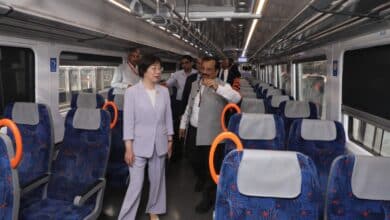
Recent reports indicate that the project, a flagship initiative under the partnership with Japan International Cooperation Agency (JICA), has achieved around 57% physical progress, with over ₹86,793 crore already spent. The first operational stretch between Surat and Bilimora is now targeted for inauguration by August 2027, while the full corridor, featuring 12 stations and designed for speeds up to 320 km/h, is expected to be completed by December 2029. The project includes elevated viaducts, tunnels, and bridges customized for Indian conditions.
The cost overrun of approximately ₹90,000 crore has led to suggestions that Indian Railways will absorb a significant portion through gross budgetary support, without seeking fresh loans from JICA, which has funded about 81% of the original estimate via a concessional 50-year loan with a 15-year moratorium. Officials have noted that the revised figures await final Cabinet sanction, expected soon.
The opposition, particularly the Congress party, has criticized the project sharply. The Kerala unit of Congress described it as a “vanity project” on social media, claiming the cost had nearly doubled despite being only half complete, with potential final figures exceeding ₹2.5 lakh crore. They alleged that the additional burden would fall heavily on Indian Railways, already facing funding constraints, and warned that ticket prices could rise to ₹6,000-₹7,000, making it unaffordable for common people.
In response, the National High Speed Rail Corporation Limited (NHSRCL), the implementing agency, issued a detailed clarification on March 5, 2026, refuting many of these claims as “misleading,” based on “conjecture and selective interpretation” rather than verified facts. NHSRCL emphasized that initial estimates were preliminary, and cost “refining” after contract finalization and detailed design is a standard global practice in large infrastructure projects. The updated projections align with international benchmarks for high-speed rail, they stated.
The corporation also denied that the entire escalation burden falls solely on Indian Railways, clarifying that funding mechanisms remain secure through the dedicated project entity, with JICA’s support intact for the core components. NHSRCL dismissed speculative figures like ₹2.5 lakh crore or exorbitant ticket prices, noting that fares are proposed to be competitive with existing rail and air travel options, as affirmed by Union Railway Minister Ashwini Vaishnaw in recent parliamentary responses.
Proponents argue that the project promises transformative benefits, including massive time savings (reducing Mumbai-Ahmedabad travel to about 2 hours), economic growth in Gujarat and Maharashtra, job creation, and regional development. Long-term viability assessments factor in projected passenger demand and indirect gains.
Critics, however, question the priorities amid strained public finances and delays that have extended the timeline by over four years. The debate underscores broader challenges in executing mega-infrastructure in India, balancing ambition with fiscal responsibility.
As the project advances toward phased operations, the focus remains on timely completion and ensuring affordability. With no major disruptions reported recently, stakeholders await final approvals and progress updates to determine if the bullet train will deliver on its promise as a symbol of modern India.