Japan’s Special Advisor to PM Lauds Advancing Work on India’s Mumbai-Ahmedabad Bullet Train

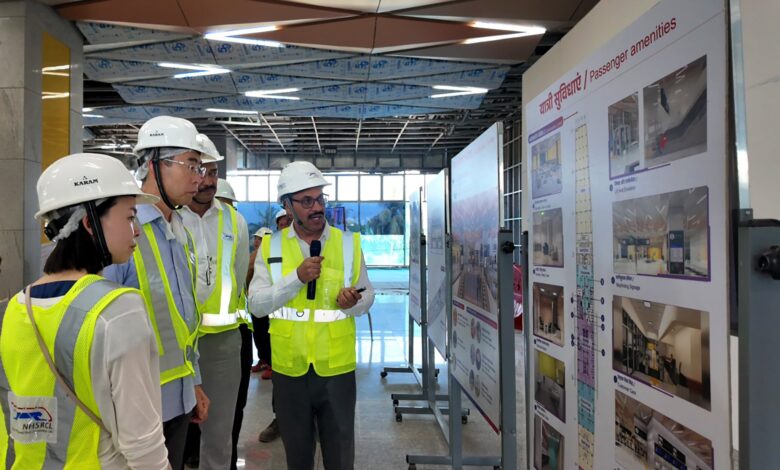
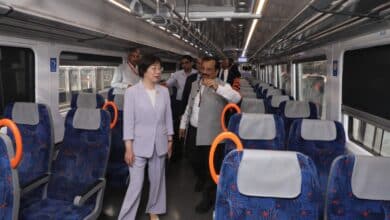
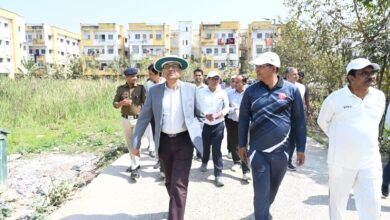
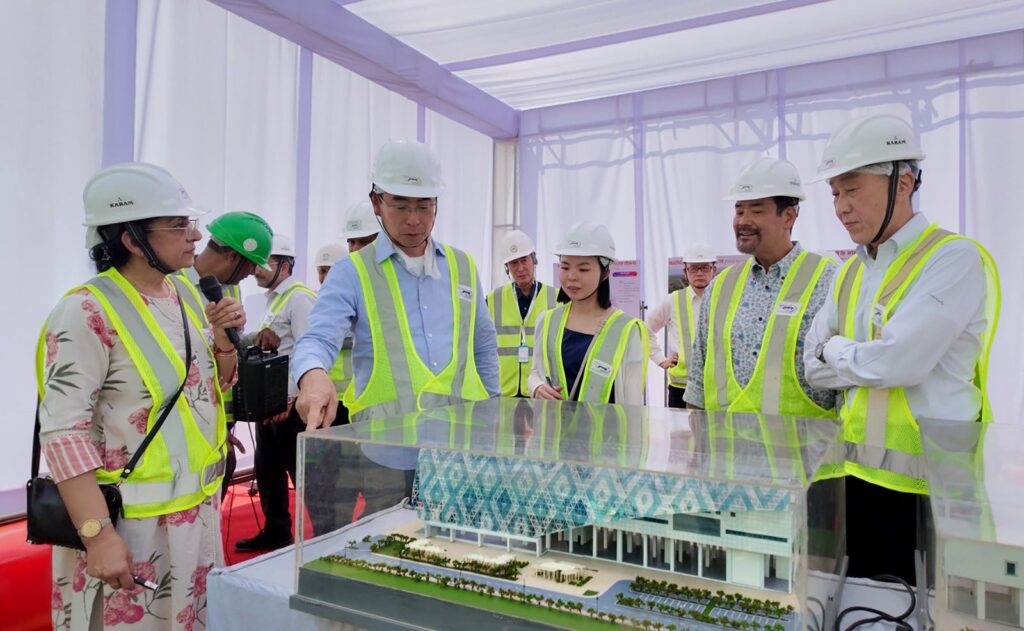
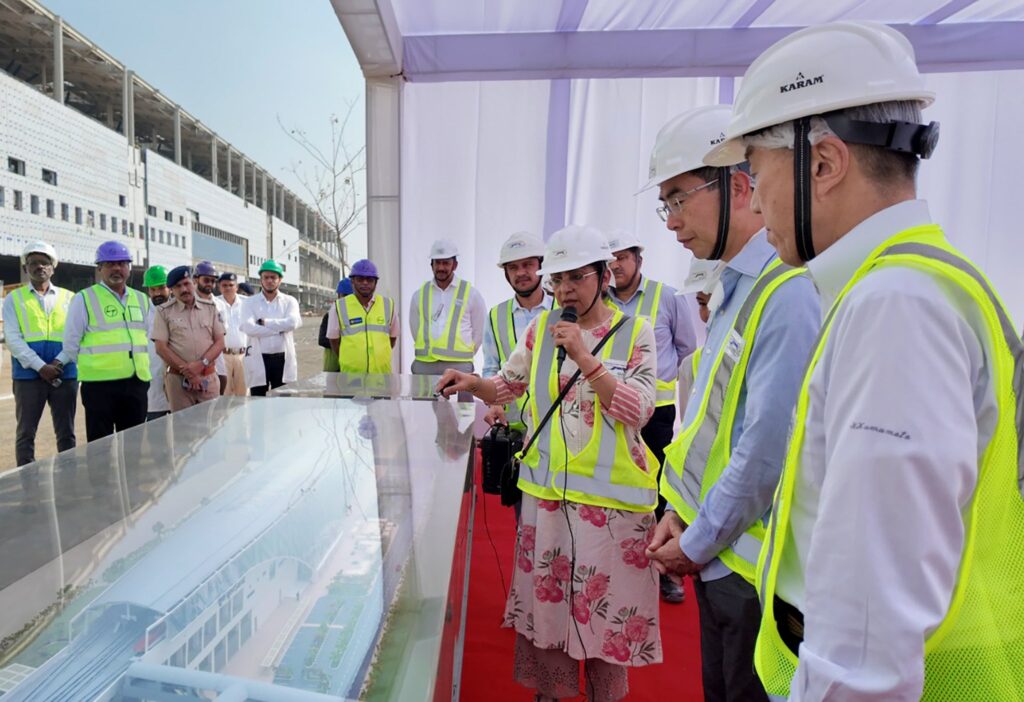
Highlighting the growing momentum of Indo-Japanese collaboration, UNO Yoshimasa, Special Advisor to the Prime Minister of Japan, led a high-level delegation on an on-site review of the Mumbai-Ahmedabad High-Speed Rail corridor in late February 2026. The 508-km project, India’s first bullet train initiative, is witnessing rapid progress and is being seen as a symbol of the deep strategic partnership between the two nations.
Union Railway Minister Ashwini Vaishnaw shared details of the visit on his official X handle on February 23, 2026, stating that Special Advisor UNO Yoshimasa and the Japanese delegation reviewed the project site and expressed satisfaction with the pace of work. “This project is a testament to the strong India-Japan partnership,” the minister said. Photographs accompanying the post showed the delegation inspecting key construction components, including viaduct structures and other critical infrastructure works. The update received widespread public appreciation, reflecting enthusiasm around the high-speed rail project.
The Mumbai-Ahmedabad High-Speed Rail (MAHSR) project is being implemented by the National High Speed Rail Corporation Limited (NHSRCL) with technical expertise and financial assistance from the Japan International Cooperation Agency (JICA). The project is largely funded through a concessional Official Development Assistance (ODA) loan from Japan, featuring a 50-year repayment period and a 15-year moratorium, making it one of the most favourable financing arrangements for a major infrastructure initiative in India.
Drawing upon Japan’s globally renowned Shinkansen technology, the corridor is designed to operate at a top speed of 320 km/h. Limited-stop services are expected to complete the journey between Mumbai and Ahmedabad in approximately 2 hours and 7 minutes, significantly reducing the existing travel time of 7–8 hours by conventional rail.
As of February 19, 2026, substantial construction milestones have been achieved. According to NHSRCL updates, 336 km of viaduct has been completed, while pier construction has progressed across 424 km. More than 6,000 overhead equipment (OHE) masts have been installed, covering nearly 140 route km. Additionally, 330 track km (equivalent to 165 route km) of reinforced concrete track bed has been constructed.
Major works are also underway on rolling stock depots at Surat and Ahmedabad. In Maharashtra, tunnelling activities are advancing steadily using the New Austrian Tunnelling Method (NATM). Notably, a breakthrough was recently achieved in a mountain tunnel section, MT-6, located in Palghar district. Underground works in Mumbai include a 2-km undersea tunnel beneath Thane Creek, being constructed with advanced tunnel boring machines—marking a first-of-its-kind engineering feat in India.
Foundation work has been completed at eight of the twelve planned stations, including Vapi, Bilimora, Surat, Bharuch, Anand, Vadodara, Ahmedabad, and Sabarmati. The corridor will ultimately connect 12 stations, including major hubs such as Thane, Virar, Boisar, and others along the route. Land acquisition for the project—covering 1,389.5 hectares—has been fully completed, alongside all statutory clearances and the shifting of 1,651 utilities.
The project incorporates advanced features such as the J-Slab ballastless track system, designed for enhanced durability, safety, and passenger comfort. Japan is set to supply next-generation E10 Series Shinkansen trains, with prototype trials expected to begin in December 2026.
Key upcoming milestones include commissioning of the initial Surat-Bilimora section in Gujarat by August 15, 2027, while full corridor operations are targeted for December 2029. Proposed fares are expected to remain competitive with existing rail and air travel options.
The high-profile review by UNO Yoshimasa underscores the strategic depth of India-Japan relations, strongly backed by Prime Minister Narendra Modi and Japanese leadership. The project also aligns with India’s broader high-speed rail ambitions, as reflected in the 2026–27 Union Budget announcement of seven additional corridors spanning over 4,000 km.
With Japanese technology and Indian execution driving steady progress, the Mumbai-Ahmedabad bullet train project is poised to redefine regional connectivity, stimulate economic growth, and stand as a landmark example of sustainable international infrastructure cooperation.