AIIB President Visits Delhi–Meerut Namo Bharat Corridor, Praises Commuter-Centric Design
Beijing-based AIIB, founded 2016, finances major Asian infrastructure projects; China largest shareholder.

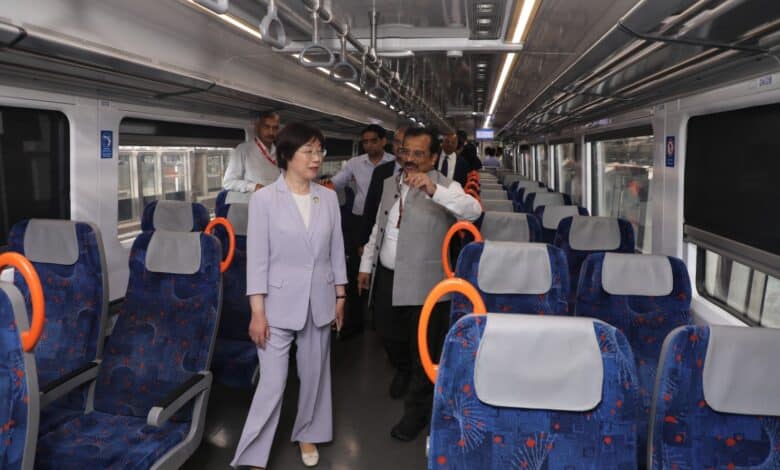
President of the Asian Infrastructure Investment Bank (AIIB), Ms. Zou Jiayi, visited the Delhi–Meerut Namo Bharat Corridor on March 2, 2026, praising the project’s commuter-centric design, advanced technology and long-term sustainability focus. She was accompanied by senior AIIB delegates and welcomed by the leadership team of National Capital Region Transport Corporation (NCRTC), including Managing Director Shalabh Goel.
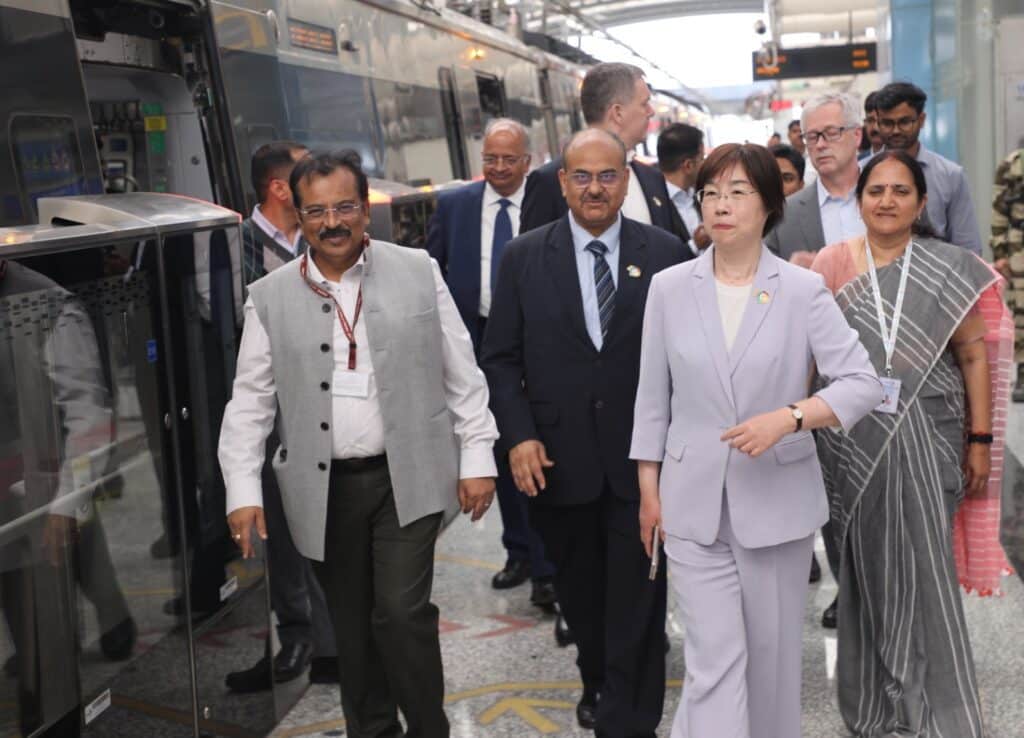
The visit commenced at Sarai Kale Khan station, the originating and one of the largest stations of India’s first Regional Rapid Transit System (RRTS). NCRTC officials provided a detailed presentation on the corridor’s development, engineering innovations and multimodal integration model. Sarai Kale Khan has been designed as a major transit hub, seamlessly connecting metro services, the railway station, interstate bus terminal, city bus stands and the Ring Road network. Officials informed the delegation that all three priority RRTS corridors under Phase 1 will converge at this station and operate interoperably, reinforcing the “network of networks” approach to urban mobility.
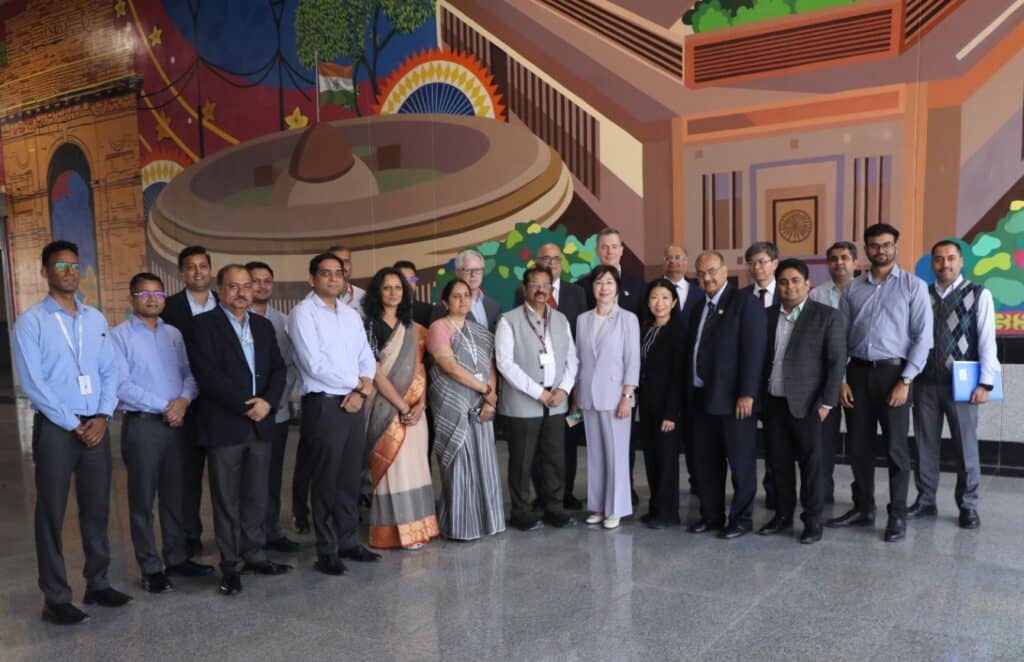
AIIB, headquartered in Beijing and established in 2016, has emerged as a leading multilateral development bank focused on building sustainable and future-ready infrastructure across Asia and beyond. China is the largest shareholder in the bank. The institution holds a AAA credit rating from major global agencies. For the Delhi–Meerut RRTS project, AIIB extended a $500 million sovereign loan as part of a joint co-financing arrangement with the Asian Development Bank (ADB), underlining strong international backing for India’s transformative urban transport initiative.
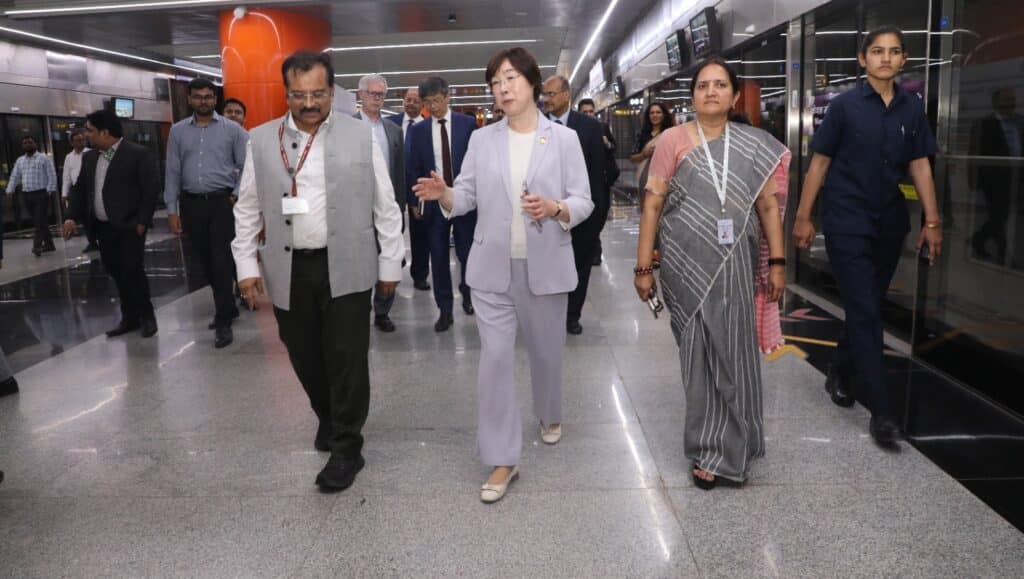
During the briefing, Ms. Zou was apprised of how the Namo Bharat corridor is addressing pressing mobility challenges in the National Capital Region, including road congestion, air pollution and long commute times. By significantly reducing travel time between Delhi, Ghaziabad and Meerut, the corridor is enabling faster and more reliable connectivity. NCRTC officials highlighted that improved regional mobility is fostering polycentric urban development, encouraging balanced economic growth across the metropolitan region rather than concentrating opportunities in a single city core.
The AIIB delegation undertook a round trip on the Namo Bharat train between Sarai Kale Khan and Anand Vihar stations, experiencing firsthand the system’s operational efficiency and passenger-focused features. At Anand Vihar, they observed the implementation of multimodal integration measures that facilitate smooth transfers between different modes of transport. The delegation appreciated the modern train design, spacious seating arrangements, accessibility features for differently-abled passengers and the emphasis on safety and comfort at stations.
Ms. Zou interacted with commuters during the journey and gathered feedback about their travel experience. Many passengers shared that the new rapid rail system had significantly reduced their daily commute time, enabling better work-life balance and improved quality of life. The AIIB President commended the deployment of advanced signalling systems, safety technologies and inclusive infrastructure standards, describing the corridor as a benchmark for sustainable and resilient mass transit systems.
A notable aspect of the visit was the emphasis on gender inclusion within NCRTC’s operational framework. Ms. Zou met women train operators and station controllers who play key roles in the system’s daily functioning. NCRTC officials highlighted that women constitute a significant proportion of operational staff, reflecting a broader commitment to inclusive workforce participation and social empowerment through infrastructure development.
The visit follows the recent dedication of the entire Delhi–Ghaziabad–Meerut Namo Bharat Corridor to the nation by the Prime Minister on February 22, 2026. With financial support from AIIB and ADB, the project exemplifies international cooperation in delivering large-scale infrastructure that combines economic efficiency, environmental sustainability and social inclusiveness.
Officials noted that AIIB’s continued engagement signals strong global confidence in India’s infrastructure transformation agenda. By integrating advanced technology, multimodal connectivity and commuter-first planning, the Delhi–Meerut Namo Bharat Corridor is emerging as a model for future rapid transit projects across India and other fast-growing urban regions.