Bijwasan Railway Terminal: Delhi’s New Airport-Like Gateway to Western India
With a 108-metre-wide air concourse, seven passenger platforms and seamless Metro connectivity, the upcoming terminal in Dwarka is set to ease congestion at Delhi’s major railway stations. The project is targeted for commissioning in FY 2026–27.

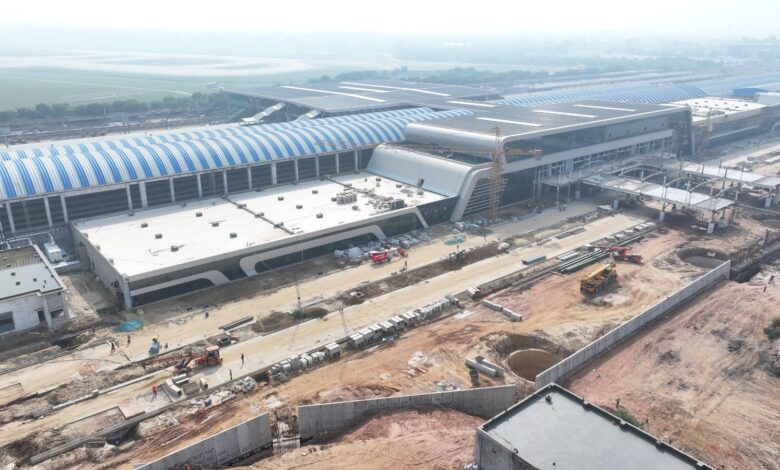
A major transformation is underway in Delhi’s railway infrastructure, with the upcoming Bijwasan Railway Terminal in Dwarka taking shape as a modern, world-class transportation hub. Designed to provide an enhanced passenger experience and improve connectivity with western India, the terminal is expected to play a significant role in strengthening the national capital’s railway network.
The progress of the landmark project was recently reviewed during a visit to the upcoming terminal. The development reflects Indian Railways’ broader efforts to modernise railway infrastructure, upgrade passenger facilities and create integrated transport hubs that bring together rail, metro and other modes of transportation.
Once operational, the Bijwasan terminal is expected to reduce pressure on New Delhi Railway Station and other heavily congested railway stations in the capital by facilitating the operation of west-bound trains. Its strategic location in Dwarka, close to Indira Gandhi International Airport and the Delhi Metro network, makes it an important addition to Delhi’s transportation infrastructure.
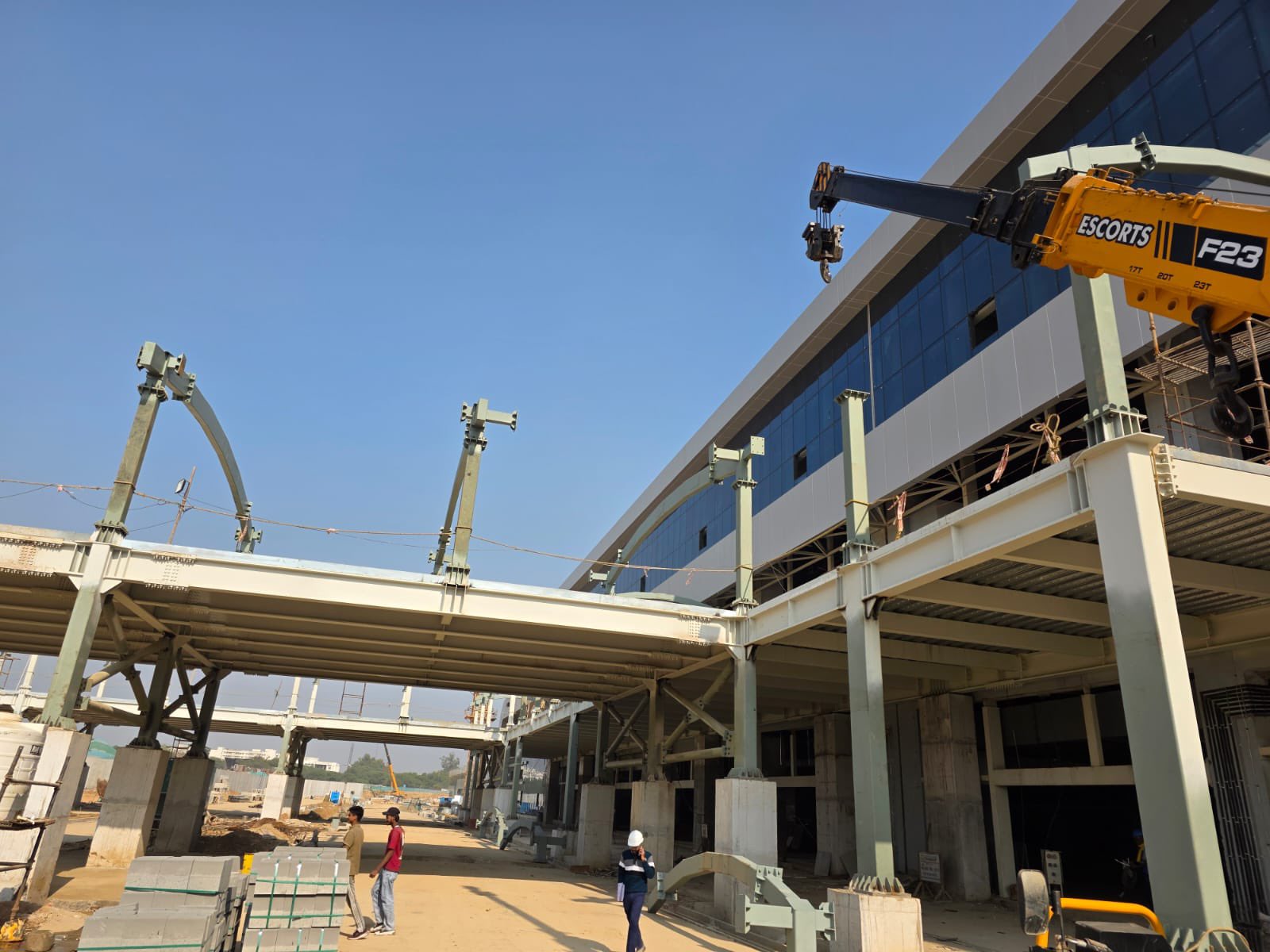
A 108-Metre Air Concourse: Where Railway Travel Meets Aviation
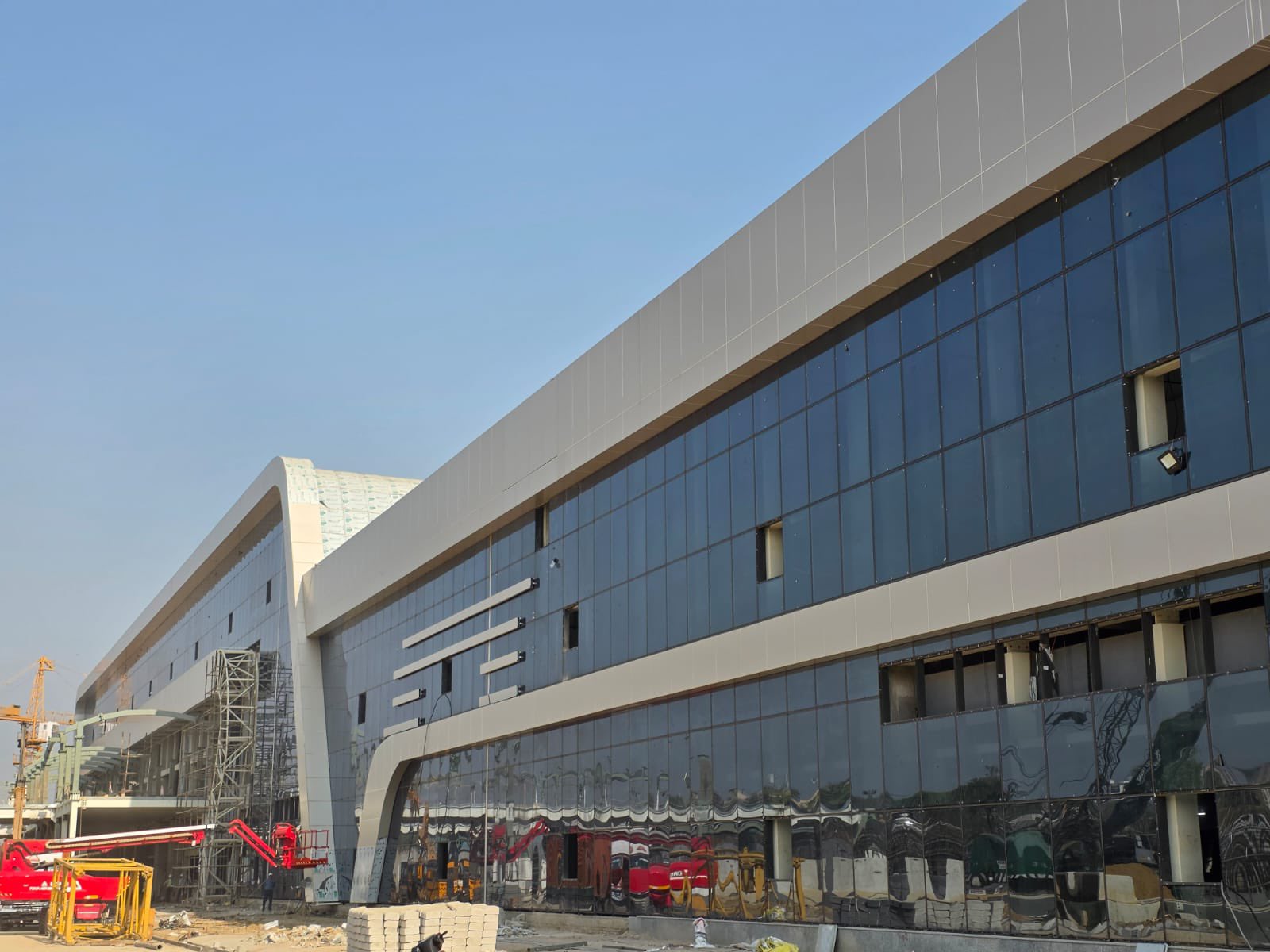
One of the most distinctive features of the Bijwasan terminal will be its spectacular air concourse, designed to provide passengers with a spacious, comfortable and modern waiting environment. The concourse will offer an airport-like experience, with passengers able to enjoy views of aircraft taking off and landing at the adjoining Indira Gandhi International Airport.
The air concourse is designed to become the central passenger circulation and waiting space, bringing together different sections of the terminal while improving passenger movement.
According to Northern Railway’s project specifications, the concourse measures approximately 108.3 metres by 103.5 metres. The station building itself is planned with a substantial built-up area, incorporating modern passenger facilities and contemporary architectural elements.
Seven Platforms and Four Wide Subways for Efficient Passenger Movement
The upcoming terminal is being developed with seven passenger platforms to facilitate the handling of long-distance trains and improve railway operations.
The project also includes four large subways, each measuring approximately 12 metres in width, to ensure smooth movement between different sections of the station.
Other important infrastructure components include:
-
Modern station building: A spacious and architecturally impressive structure equipped with contemporary passenger amenities.
-
Arrival plaza: A large arrival area at the lower level to facilitate the organised movement of passengers.
-
Departure facilities: Dedicated and spacious departure areas designed to improve passenger circulation.
-
Parking infrastructure: Extensive parking facilities for private vehicles and other modes of transport.
-
Circulation areas: Well-planned internal roads and passenger movement zones to minimise congestion.
-
Platform shelters: Modern shelters to improve passenger comfort during boarding and waiting.
The station’s design emphasises the segregation of arriving and departing passengers, an important feature for managing passenger volumes efficiently at a major railway terminal.
The project also incorporates modern utilities, electrical infrastructure, sewage treatment facilities and other essential services to support the functioning of a large transportation complex.
Seamless Connectivity with Delhi Metro and Airport
Multimodal connectivity is another major highlight of the Bijwasan Railway Terminal.
The terminal’s location near Dwarka Sector 21 Metro Station provides access to the Delhi Metro network, including the Airport Express Line and the Blue Line. This connectivity is expected to make the terminal particularly convenient for passengers travelling between different parts of Delhi-NCR and the airport.
For air travellers, the proximity to Indira Gandhi International Airport could provide additional convenience, particularly for passengers combining long-distance rail journeys with domestic or international air travel.
The integration of railway, metro and road transportation is consistent with the broader objective of developing transport hubs where passengers can transfer between different modes of public transport with greater ease.
The redevelopment plan also envisages improved approach roads, parking, pedestrian access and external circulation facilities.
Strategic Importance: Reducing Congestion at Delhi’s Major Stations
Delhi’s railway network handles substantial passenger traffic, with New Delhi, Old Delhi, Hazrat Nizamuddin and Anand Vihar serving as important railway gateways.
The development of Bijwasan is expected to distribute some of the railway traffic across the capital by providing additional terminal capacity, particularly for trains operating towards western parts of the country.
Its strategic location in southwestern Delhi makes it relevant for railway connectivity towards destinations in Rajasthan, Gujarat, Maharashtra and Madhya Pradesh.
By facilitating the operation of trains that currently use congested terminals, the new facility could help improve operational flexibility and passenger convenience.
The project also aligns with the broader planning vision of developing directional railway terminals around the national capital, reducing the concentration of transport infrastructure in central Delhi.
A redevelopment proposal approved by Delhi’s Unified Traffic and Transportation Infrastructure Planning and Engineering Centre (UTTIPEC) had earlier identified the importance of integrating Bijwasan with surrounding roads, the airport and other transportation infrastructure.
Construction Progress: Major Structural Components Completed
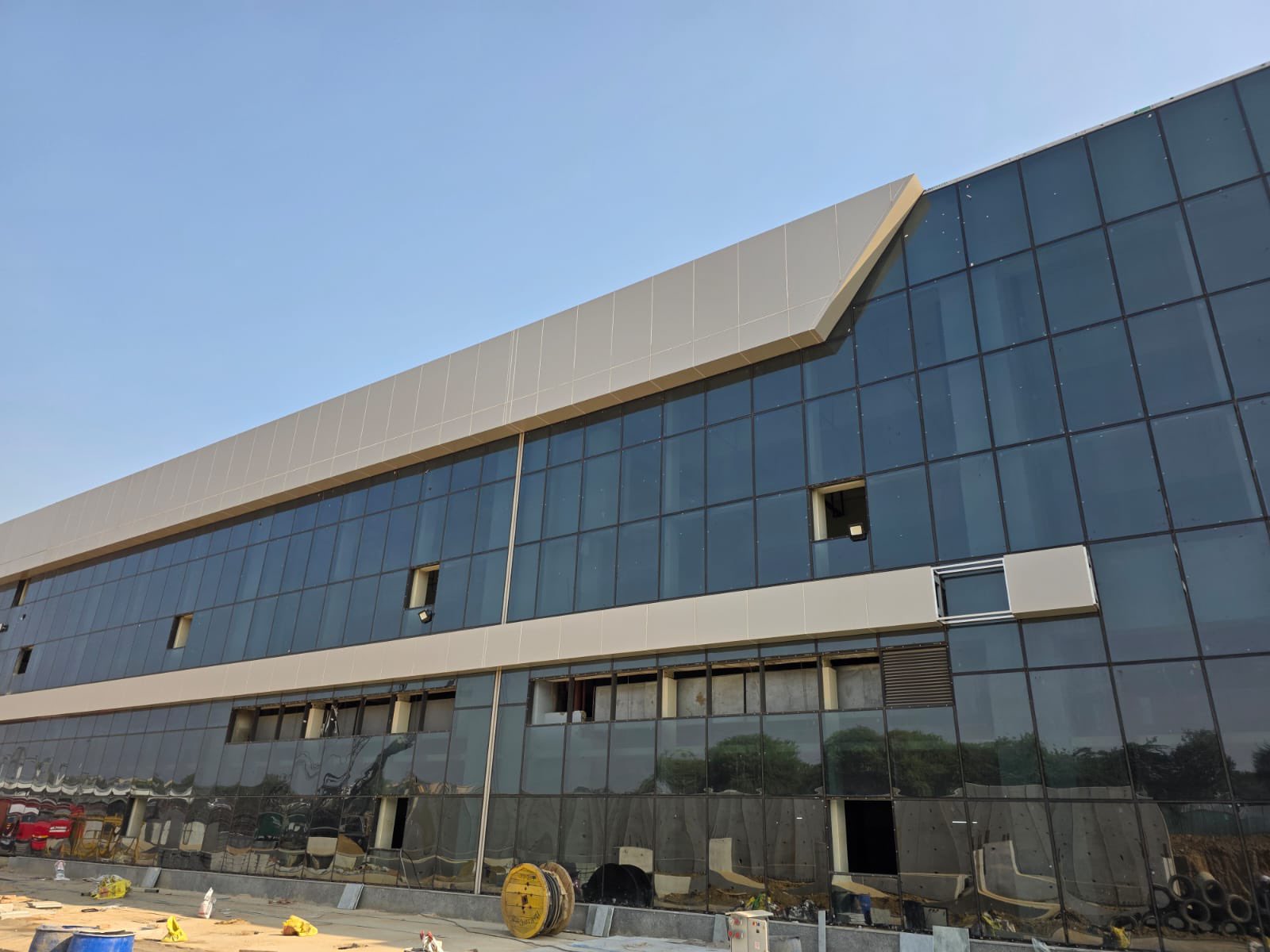
Construction of the Bijwasan terminal has progressed significantly, with several major structural components already completed.
In an update issued on March 26, 2026, the Ministry of Railways informed that the structural work of the station building and air concourse had been completed. Finishing activities were underway, while platform shelters were also being developed.
The structural work of the electrical substation, sewage treatment plant and subway had also been completed, with finishing and associated works progressing.
These developments indicate that the project has moved beyond several major structural construction milestones and is progressing towards the completion of passenger facilities and associated infrastructure.
A New Benchmark for Railway Infrastructure
The Bijwasan Railway Terminal represents an important step towards transforming railway stations from conventional boarding and deboarding facilities into integrated urban transportation hubs.
Its combination of a large air concourse, modern station architecture, multiple passenger platforms, spacious arrival and departure facilities, parking infrastructure and Metro connectivity reflects the changing approach towards railway station development in India.
The project is also significant because of its proximity to Delhi Airport, offering an opportunity to bring railway and aviation infrastructure closer together through integrated passenger movement.
Once commissioned, Bijwasan is expected to strengthen Delhi’s railway infrastructure, provide additional capacity for long-distance trains and improve the travel experience for passengers heading towards western India.
For Indian Railways, the terminal will be more than another station redevelopment project. It will represent an important addition to the national capital’s transportation network, combining modern railway infrastructure, architectural design and multimodal connectivity.
Bijwasan is poised to emerge as a new gateway to western India, where railway travel meets the aviation experience.