PM Modi Celebrates Diwali with Security Forces in Bastar, Says India Is Now Free from Naxalism
Prime Minister Says Every District in the Country Has Become Naxal-Free; Highlights Historic Security Achievement as No CRPF Personnel Lost Their Lives on Duty in the Past Year for the First Time in 47 Years

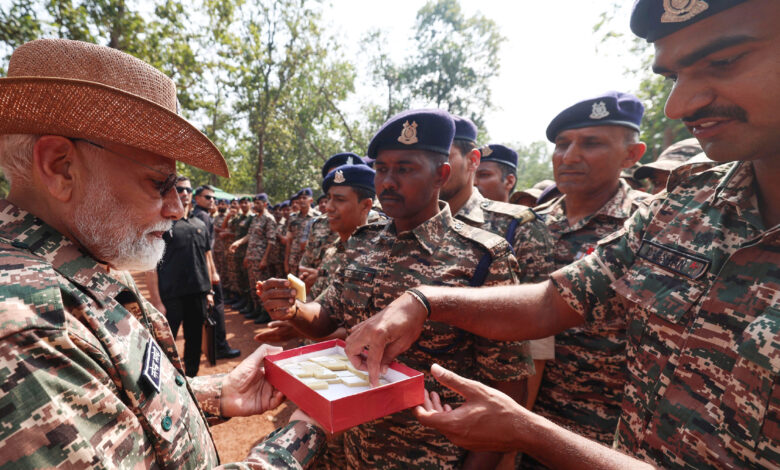
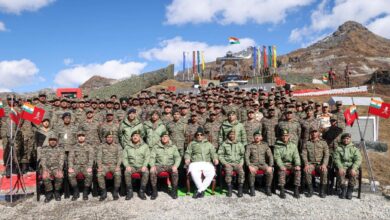
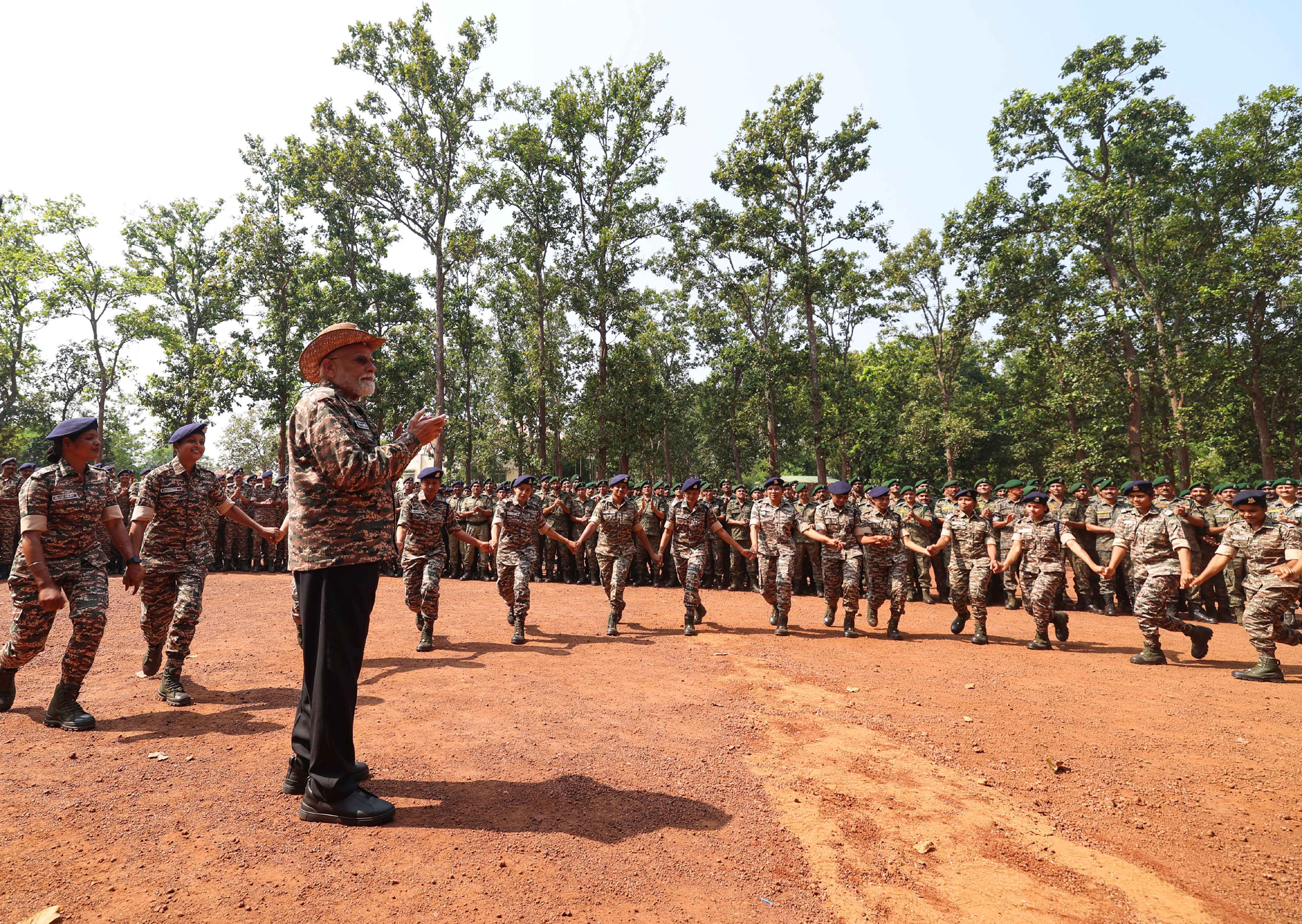
Prime Minister Narendra Modi celebrated Diwali 2026 with security personnel at the CoBRA Operations Base in Karanpur, Bastar district of Chhattisgarh, on Sunday, November 8, marking what he described as a historic milestone in India’s fight against Left-Wing Extremism. Addressing personnel from various security forces, the Prime Minister declared that every district in the country was now free from Naxalism, making this the first Diwali India was celebrating after the end of decades of Maoist violence.
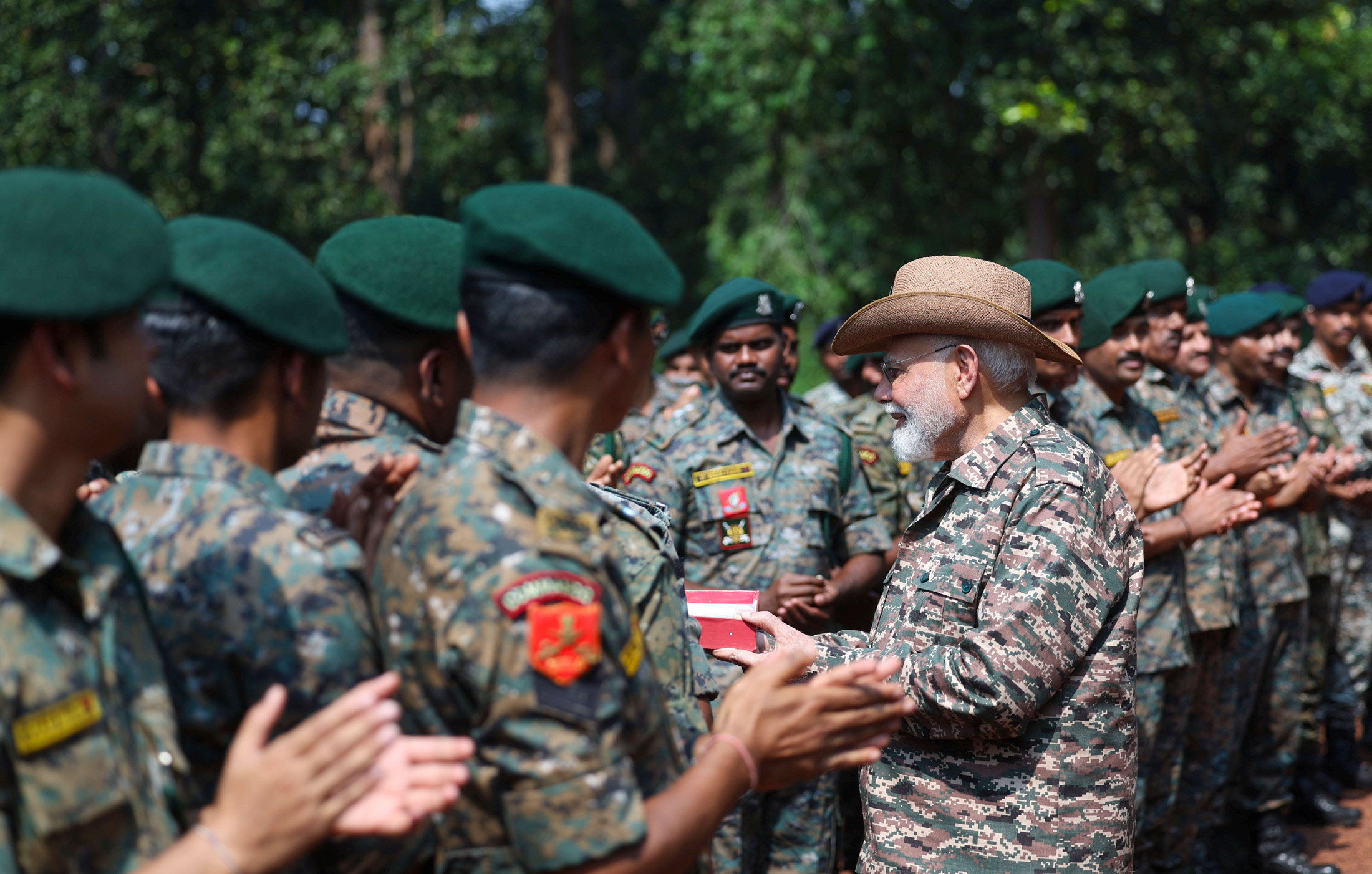
The Prime Minister visited the CoBRA Operations Base, which served as an important training centre and launchpad for counter-Naxal operations in Bastar and the Abujhmad region. He interacted with security personnel and extended Diwali greetings to the forces deployed in some of the country’s most challenging operational areas.
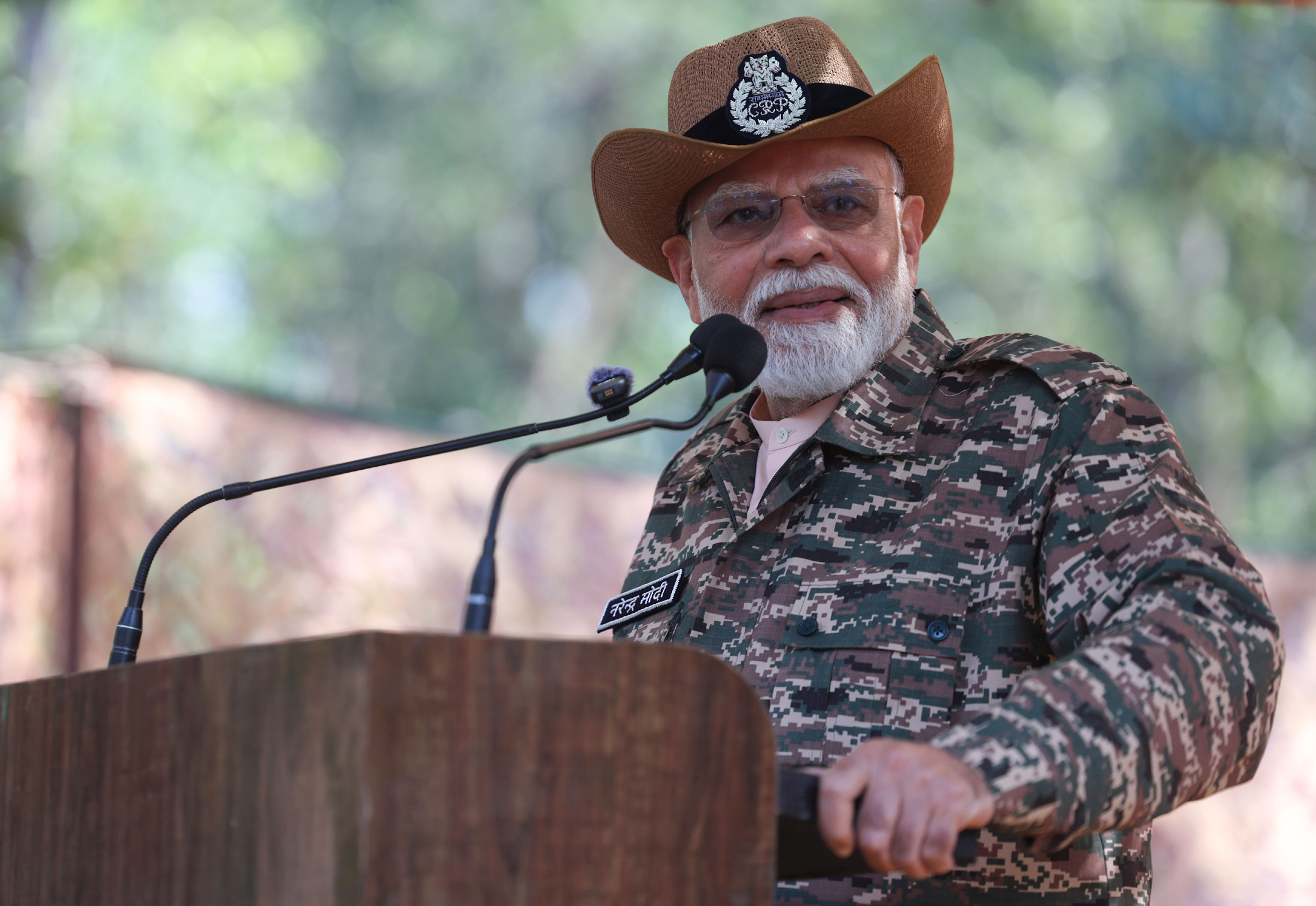
Describing the occasion as particularly special, Modi said he had travelled to Bastar to express the gratitude of 140 crore Indians towards the security personnel whose sacrifices, courage and dedication had made the achievement possible.
Recalling his earlier Diwali celebrations with soldiers in Kargil, Lepcha in the Himalayas, Sir Creek along the coast and aboard INS Vikrant, the Prime Minister said that the security personnel protecting the country’s borders and maintaining internal security were equally close to him.
“At the borders and within the country, the sentinels of the nation who protect the country, the brave sons of Maa Bharati, all of you are my loved ones, all of you are a part of my family,” he said.
India Achieves Historic Milestone in Fight Against Naxalism
Highlighting the transformation in the country’s internal security situation, Modi said that the year 2026 marked a decisive turning point in India’s decades-long struggle against Maoist terrorism.
He recalled that Left-Wing Extremism had once affected more than 230 districts across nearly 20 states, including Bihar, Maharashtra, Odisha, Uttar Pradesh, Madhya Pradesh and Chhattisgarh. In several regions, Maoist groups had established parallel systems of control, creating an atmosphere of fear and disrupting democratic institutions, public services and development activities.
The Prime Minister said that people in Naxal-affected regions had faced severe restrictions on their freedom, with elections disrupted, development projects obstructed and ordinary citizens forced to live under constant fear.
He referred to the scale of violence during the earlier years, stating that Maoist groups carried out nearly 2,000 attacks annually. Chhattisgarh alone witnessed the martyrdom of more than 1,000 security personnel during the period under discussion.
Recalling the 2010 Dantewada attacks, he highlighted the killing of 76 CRPF personnel in one attack and 44 civilians in a separate incident, describing these events as reminders of the grave security challenges faced by the country.
According to the Prime Minister, between 2004 and 2013, the number of security personnel killed annually was higher than the number of Naxals eliminated, strengthening the confidence of Maoist leadership.
He said that the government changed this situation after 2014 by adopting a firm and coordinated strategy against Naxal violence.
A major achievement, he pointed out, was that not a single CRPF jawan had lost their life while on duty during the past year. According to Modi, this was the first such occurrence in 47 years.
“This is the victory of the country’s right policies and firm willpower, and this is the victory of your valour, courage and restraint,” he said.
Security Forces Given Operational Freedom
The Prime Minister credited the success of counter-Naxal operations to a combination of strong political resolve, improved security strategies, intelligence coordination and operational freedom for personnel on the ground.
He said the government had taken several tough decisions to dismantle the financial and logistical networks supporting Maoist activities. Some of these decisions, he noted, were implemented without public announcements or publicity.
Modi said action against Naxal funding, separatist financial networks and counterfeit currency operations weakened the economic foundation of extremist organisations.
These measures also disrupted the supply of weapons, restricted the movement of armed cadres and made recruitment increasingly difficult for Maoist groups.
He emphasised that security forces had been given complete operational freedom to take decisions necessary for ensuring national security.
The Prime Minister said the government’s objective was not merely to eliminate armed extremists but also to prevent young people from joining extremist organisations and protect families from losing their loved ones.
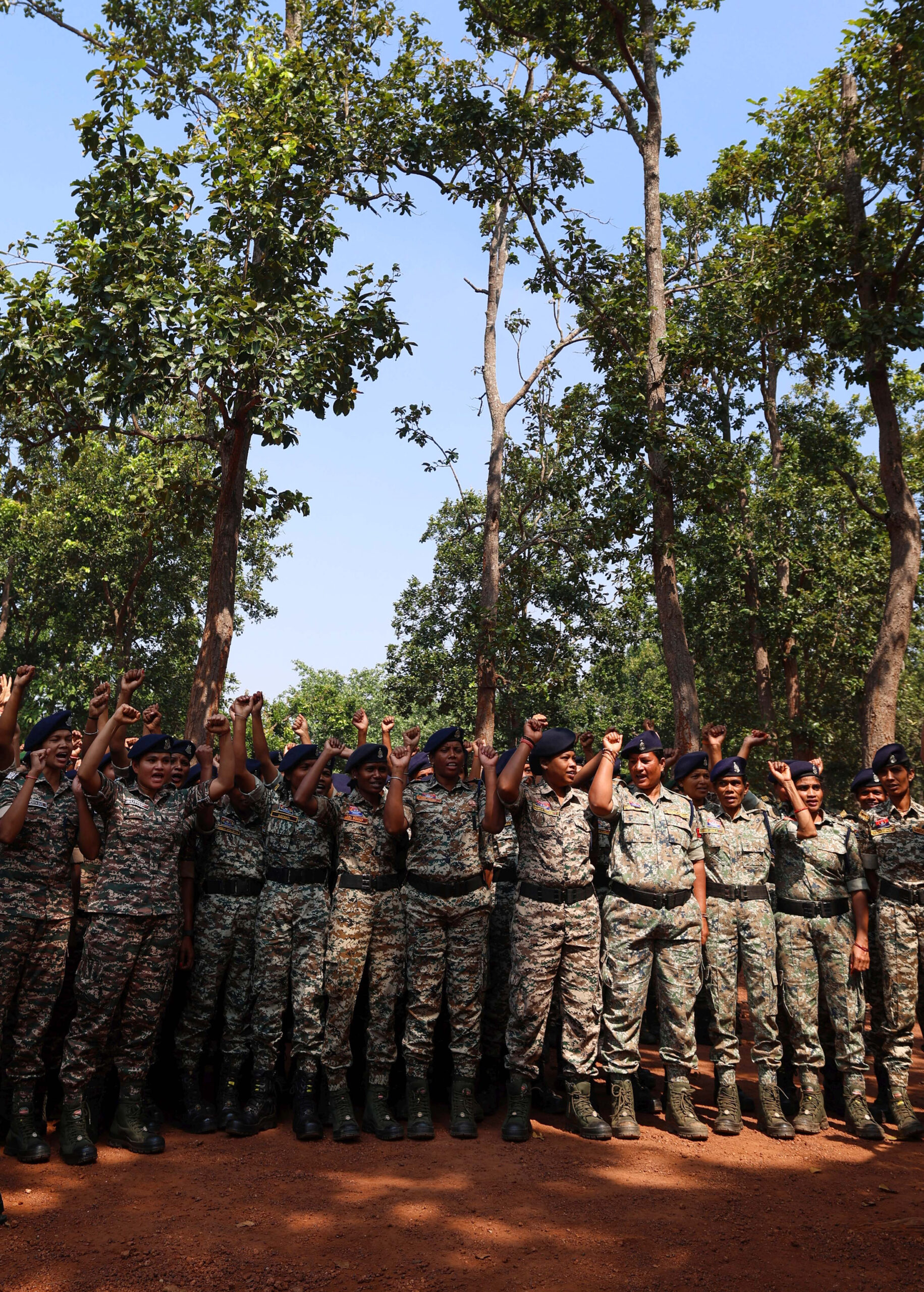
He praised personnel from the CRPF, CoBRA, BSF, ITBP, SSB, India Reserve Battalions, state police forces and Bastar Fighters commandos. He also acknowledged the contribution of women security personnel and extended Diwali greetings to soldiers guarding India’s international borders.
Modi said the country would remain indebted to the security forces for their service and sacrifice.
Development and Security Worked Together to Transform Bastar
Emphasising that military and security operations alone could not provide a permanent solution to Naxalism, the Prime Minister said the government had simultaneously focused on improving living conditions in affected regions.
He said the administration adopted a service-oriented approach to address the longstanding problems of tribal communities and people living in remote villages.
According to Modi, development initiatives and sensitive security operations together helped restore public confidence in government institutions.
He thanked local residents for cooperating with security forces and supporting the government’s efforts to establish peace.
The Prime Minister highlighted the development of roads, mobile connectivity, educational institutions, skill development centres, banking infrastructure and essential public services in areas previously affected by Maoist violence.
He said more than 15,000 kilometres of roads had been constructed in Left-Wing Extremism-affected regions. The government had also installed over 9,500 mobile towers to improve connectivity.
Nearly 175 Eklavya Model Residential Schools, around 50 Industrial Training Institutes (ITIs) and 50 Skill Development Centres had been established as part of the development drive.
Thousands of post offices, bank branches and ATMs had also been brought to these regions, expanding access to financial services.
The Prime Minister further highlighted the role of the PM JANMAN initiative in extending basic facilities such as drinking water, electricity and road connectivity to remote tribal villages.
He said the government had also focused on rehabilitating Naxals who surrendered and encouraging them to return to mainstream society.
50 Crore People Have Come Out of Extreme Poverty
Linking the success against Naxalism with India’s broader development journey, Modi said the country had achieved two major victories over the past 12 years: the elimination of Naxal violence and a significant reduction in extreme poverty.
Referring to a World Bank report released shortly before Deepavali, the Prime Minister said approximately 50 crore Indians had come out of extreme poverty during this period.
He described this achievement as the result of several welfare programmes implemented by the government to improve access to housing, healthcare, banking, education, sanitation and drinking water.
Comparing India’s welfare initiatives to a Diwali rangoli, Modi said individual schemes had come together to create a larger transformation in people’s lives.
He referred to the Pradhan Mantri Jan Dhan Yojana, which expanded access to banking services, the PM Awas Yojana for providing permanent houses, Mudra loans for small entrepreneurs and the PM SVANidhi scheme for street vendors.
He also highlighted Ayushman Bharat, free foodgrain distribution, Swachh Bharat, Har Ghar Jal and initiatives aimed at improving children’s education.
According to the Prime Minister, these programmes had reduced the financial uncertainties faced by economically weaker families and provided them with greater confidence and opportunities.
He said families that had traditionally remained trapped in generational poverty were now able to look towards a more secure future.
Bastar Olympics Symbolises Changing Aspirations of Youth
The Prime Minister cited the ongoing Bastar Olympics as an example of the transformation taking place in the region.
He said that children and young people in Bastar were increasingly participating in sports and other constructive activities instead of being drawn towards violence.
“Today in this very Bastar, the Bastar Olympics are taking place, and children are trying their hand at sports, not guns,” Modi remarked.
He said the participation of local youth in sports reflected the growing atmosphere of confidence, opportunity and peace in the region.
The Prime Minister emphasised that the end of Naxal violence should not be viewed as the final destination but as the beginning of a new development journey.
Vision of Drug-Free, Self-Reliant and Developed India
Concluding his address, Modi said the country’s achievements in strengthening internal security and reducing poverty should inspire citizens to work towards larger national objectives.
He referred to earlier national commitments, including the abrogation of Article 370, expansion of household sanitation facilities and the country’s vaccination programmes, saying India had demonstrated its ability to fulfil challenging goals through collective determination.
He expressed confidence that the country would similarly achieve its objectives of eradicating poverty and building a drug-free, self-reliant and developed India.
Addressing security personnel, the Prime Minister invoked the spirit of sacrifice reflected in the words, “Tera Gaurav Amar Rahe Maa, Hum Din Chaar Rahein Na Rahein.”
He urged them to channel their dedication towards building a stronger nation and fulfilling the aspirations of freedom fighters, soldiers and those who had sacrificed their lives fighting terrorism and extremism.
“Now is the time to live for the nation and to take the nation to a new height,” he said.
Modi concluded by extending Diwali greetings to the security personnel and their families, stating that their sacrifices and hard work would form a strong foundation for the construction of Viksit Bharat.
He said the historic transformation of Bastar and other Naxal-affected regions demonstrated what could be achieved when security, development and public participation worked together towards the national interest.