
FAIMA Demands National Safeguards for App-Based Doctor Home Visits
The medical association warns that corporate health aggregators risk treating doctors as an on-demand workforce, urging clinical safety over consumer convenience

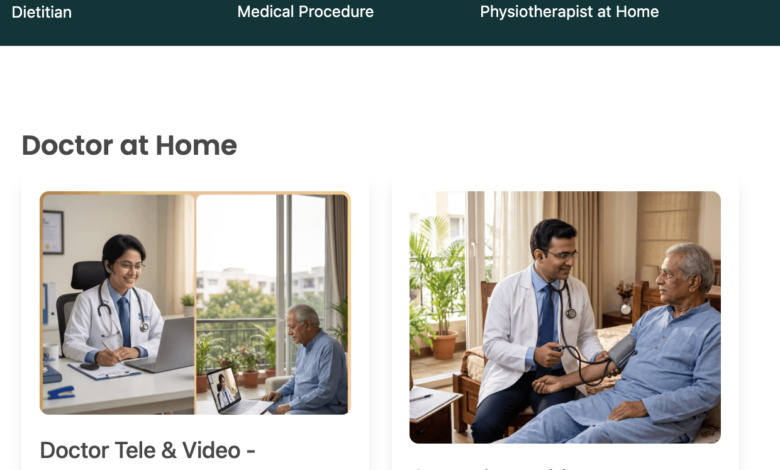
FAIMA has raised concerns over the growing use of digital aggregator platforms for commercial, on-demand doctor home visits, calling for clear clinical, legal and patient-safety safeguards before such services expand further.
In a statement dated September 29, 2026, the Federation of All India Medical Associations (FAIMA) said its concern was not with home-based medical care itself, but with the conversion of doctor home visits into an app-driven commercial service model.
According to FAIMA, doctors have traditionally provided home consultations when clinically appropriate, particularly for elderly, bedridden, disabled and palliative-care patients. The association said such visits remain an important component of patient-centred healthcare when guided by professional judgment and appropriate safety measures.
However, FAIMA questioned models in which patients can request a doctor through a digital application in a manner similar to other on-demand consumer services. The association said a doctor’s decision to undertake a home consultation should depend on clinical appropriateness, patient safety and professional judgment, rather than commercial demand, algorithms, incentives or corporate targets.
FAIMA Seeks Safeguards for Digital Home-Visit Platforms
The association said several issues require attention as digital platforms and corporate aggregators enter the home medical-services sector. These include:
| Area of concern | Issues highlighted by FAIMA |
|---|---|
| Clinical care | Clinical triage and assessment |
| Emergency response | Emergency backup and referral mechanisms |
| Documentation | Medical records and consultation documentation |
| Patient protection | Identification and informed consent |
| Professional responsibility | Prescription and referral responsibilities |
| Legal issues | Medico-legal accountability and professional indemnity |
| Doctor safety | Safety of doctors making home visits |
| Digital health | Data protection and privacy |
FAIMA argued that a patient’s residence cannot automatically be treated as equivalent to a hospital, clinic or emergency-care facility. Certain medical conditions may require diagnostic investigations, continuous monitoring, trained support personnel, emergency medicines, oxygen, resuscitation facilities or immediate access to referral services.
The association said clinical safety should take precedence over convenience when determining whether a home consultation is appropriate.
Concerns Over Commercialisation of Medical Services
FAIMA also raised concerns about the potential impact of aggregator-based models on doctors’ professional autonomy. It said doctors could potentially be treated as an on-demand workforce, while digital intermediaries determine consultation prices, availability and service conditions.
The association said the professional value of doctors should not be reduced to the lowest price offered through an application. It stressed that medical education, residency, clinical training and professional responsibilities need to be recognised while designing new healthcare delivery models.
The concerns come as digital technology continues to expand within India’s healthcare ecosystem. The government’s digital-health initiatives have also sought to improve interoperability and connect patients and healthcare providers through technology. In June 2026, the Union Health Ministry launched the Unified Health Interface (UHI) as an interoperable network intended to connect patients and healthcare providers across different digital platforms.
Existing National Medical Commission telemedicine guidance similarly places professional judgment of the registered medical practitioner at the centre of technology-enabled consultations. The guidance says doctors must determine whether technology-based consultation is sufficient or whether an in-person consultation is required, while considering patient identification, consent, evaluation and management.
Call for National Standards
FAIMA has appealed to the National Medical Commission, Ministry of Health and Family Welfare and other competent authorities to examine the emerging digital home-care aggregator model and consider clear national standards.
According to the association, such standards should define requirements for clinical eligibility, triage, documentation, informed consent, emergency referral, professional liability, data protection, doctor safety and the responsibilities of digital platforms.
FAIMA said technology can play a constructive role in improving access to healthcare, but its use should operate within established clinical and professional standards.
The association has urged doctors to exercise caution before joining commercial door-to-door medical aggregator platforms, particularly where protocols, safety mechanisms, professional indemnity arrangements and medico-legal responsibilities are not clearly established.
FAIMA’s position, as stated in its September 29 communication, is to support genuine and clinically appropriate home-based medical care and technology that strengthens doctor-patient care, while opposing commercial models that, in its view, could compromise clinical judgment, patient safety or professional autonomy.
The association has called for greater regulatory clarity so that the expansion of digital healthcare services protects both patients and medical professionals while maintaining standards of medical care.