Bairabi-Sairang Railway Line Completes One Year, Transforming Mizoram’s Connectivity
Railway link brings passenger mobility, freight connectivity, tourism and new economic opportunities closer to Mizoram’s capital

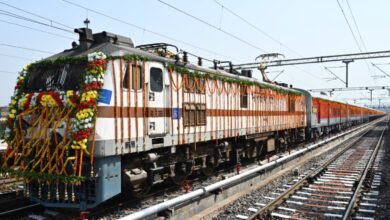
The 51.38-km Bairabi-Sairang railway line has completed one year of operations, marking a major milestone in Mizoram’s connectivity and development journey. Inaugurated on September 13, 2025, along with Sairang Railway Station, the line has transformed rail access to the hill state and created new opportunities for passenger travel, freight movement, tourism, education and local businesses.
According to information released by the Press Information Bureau on September 13, 2026, the railway line has evolved within a year from a new addition to the national railway network into an important mobility and logistics gateway for Mizoram. The project brings railway connectivity close to Aizawl, the state capital and its largest centre of population, administration, education and commerce.
Engineering Railway Through Mizoram’s Difficult Terrain
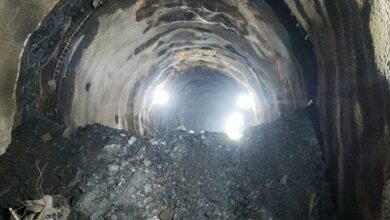
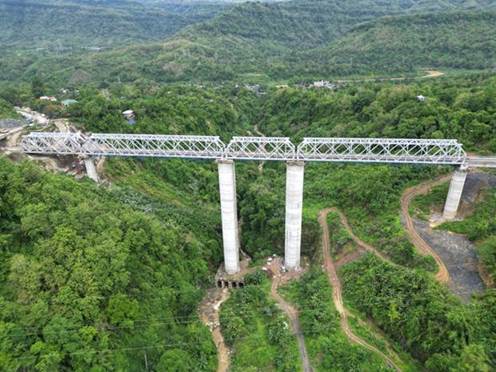
The Bairabi-Sairang line traverses some of the most challenging terrain in the region, passing through steep hills, deep valleys and gorges.
The railway project includes a large number of bridges and tunnels designed to negotiate the difficult Himalayan-foothill terrain.
| Infrastructure Component | Details |
|---|---|
| Railway line length | 51.38 km |
| Total bridges | 153 |
| Major bridges | 55 |
| Minor bridges | 88 |
| Road Over/Under Bridges | 10 |
| Bridges above 70 metres | 6 |
| Tallest bridge | 114 metres |
| Tunnels | 45 |
| Total tunnel length | Nearly 16 km |
| Stations | Hortoki, Kawnpui, Mualkhang and Sairang |
The tallest bridge on the route rises approximately 114 metres, making it around 42 metres taller than Delhi’s Qutub Minar. The alignment also includes 45 tunnels extending for almost 16 kilometres.
The railway corridor extends the national rail network from Bairabi through the newly developed stations of Hortoki, Kawnpui and Mualkhang to Sairang.
The completion of the line has therefore addressed one of Mizoram’s longstanding connectivity challenges, reducing the state’s dependence on road transportation for long-distance passenger and freight movement.
Passenger Connectivity Records Strong Demand
The new railway link has quickly established direct connections between Sairang and several major cities.
Three important long-distance services connect Mizoram with Guwahati, Kolkata and Delhi, while a passenger service links Sairang with Silchar in Assam.
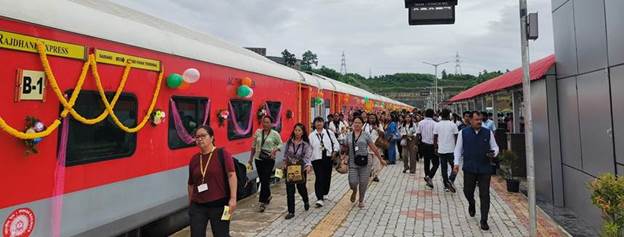
The Sairang-Anand Vihar Rajdhani Express provides Mizoram with a direct premium rail connection to the national capital. Services to Guwahati and Kolkata provide access to major educational, commercial and medical centres, while the Sairang-Silchar passenger service strengthens connectivity with Assam’s Barak Valley.
The Silchar service was inaugurated in January 2026.
Passenger Rail Performance in One Year
| Indicator | Performance |
|---|---|
| Long-distance services | 3 major connections |
| Additional passenger link | Sairang-Silchar |
| Trips completed | More than 1,100 |
| Passengers served | More than 15 lakh |
| Sairang station passenger movements | More than 5.54 lakh |
| Average daily station footfall | Around 3,300 passengers |
The four services together have completed more than 1,100 trips during the first year and have carried over 15 lakh passengers.
Demand has remained particularly strong, with the services reportedly operating at more than 100 per cent capacity on every trip.
The tri-weekly Sairang-Kolkata service recorded average occupancy of more than 140 per cent, while the daily Sairang-Guwahati service maintained occupancy above 110 per cent. The Sairang-Anand Vihar Rajdhani Express recorded average occupancy of more than 145 per cent.
The services generated total ticket sales of approximately ₹54 crore for Indian Railways.
Sairang Emerges as Passenger and Logistics Gateway
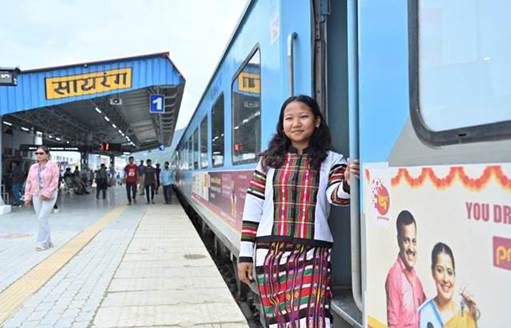
Sairang Railway Station has also emerged as an important passenger hub. During the first year, it handled more than 5.54 lakh passenger movements, averaging approximately 3,300 passengers a day.
Beyond transportation, the station has become part of the surrounding community, with local residents participating in tree plantation and other environmental initiatives around the station complex.
Freight Rail Opens New Supply Chain for Mizoram
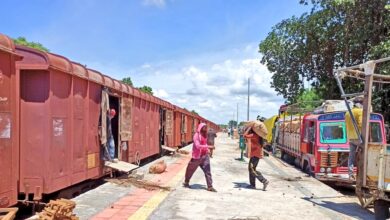
The impact of the Bairabi-Sairang line extends beyond passenger transportation. Rail connectivity has created a new channel for transporting essential commodities, automobiles and construction materials to Aizawl and other parts of Mizoram.
The first freight train arrived at Sairang on September 14, 2025, just one day after the railway line was inaugurated. The train carried more than 26,000 bags of cement from the STAR Cement siding at Tetelia near Guwahati.
The arrival of the cement rake demonstrated the potential of rail transportation to reduce logistics costs and improve the availability of construction materials in the state.
In December 2025, the first automobile consignment reached Sairang by rail. The rake carried 119 Maruti cars from Changsari near Guwahati, creating a higher-capacity transportation channel for automobiles.
Freight Movement at Sairang
| Freight Indicator | One-Year Performance |
|---|---|
| Railway freight delivered | More than 2,500 wagons |
| Construction materials share | Approximately 70% |
| Automobile wagons | 156 |
| First cement consignment | 26,000+ bags |
| First automobile consignment | 119 Maruti cars |
More than 2,500 wagons of railway freight were delivered at Sairang during the first year. Around 70 per cent consisted of construction materials such as cement, stone and sand.
These materials have supported housing and public works in Mizoram while providing a more efficient alternative to long-distance road transportation.
Other freight handled at Sairang included rice and fertilizers, supporting food supply, agriculture and local public distribution systems. Automobile consignments have also provided a safer and higher-capacity supply channel for vehicles.
Railway Connectivity Boosts Tourism
Improved rail access has also made Mizoram more accessible to domestic tourists.
Direct services from Delhi, Kolkata, Guwahati and Silchar provide visitors with an alternative to air travel and lengthy road journeys. According to the supplied PIB material, tourism in Mizoram has grown by more than 86 per cent since the introduction of railway connectivity.
The impact extends across the local economy, benefiting hotels, homestays, restaurants, taxi operators, tourist guides, cultural enterprises and local markets.
Greater connectivity is also expected to make it easier for Mizoram to host educational, sporting, cultural and official events involving participants from other parts of the country.
Students Gain Easier Access to Education
The railway line is also improving mobility for students from Mizoram.
With direct rail connections to major cities, students now have more practical travel options for accessing universities, professional institutes, coaching centres, examinations and academic events outside the state.
This wider connectivity can reduce dependence on more expensive or time-consuming travel options and improve access to educational opportunities across the country.
Local Products Get Access to National Markets
Rail connectivity is also creating new possibilities for Mizoram’s local enterprises.
The first parcel consignment from Sairang was booked on September 19, 2025, carrying Anthurium flowers to Delhi through the parcel van of the Sairang-Anand Vihar Rajdhani Express.
The consignment demonstrated the potential of railway parcel services to provide local producers with direct access to markets outside Mizoram.
The railway network can similarly support the movement of Mizoram’s handloom, bamboo, cane and other craft products, helping local enterprises reach consumers in national markets.
From Connectivity to Economic Opportunity
The first year of the Bairabi-Sairang railway line demonstrates the broader economic and social impact that connectivity infrastructure can create.
For passengers, the line has opened direct access to major cities. For students, it has provided more practical travel options to educational centres. For tourists, it has created an affordable gateway to Mizoram. For businesses, it has opened a new freight channel for construction materials, automobiles, foodgrains and fertilizers.
The railway has also created opportunities for local products to reach national markets through parcel services.
The Bairabi-Sairang line is therefore more than a 51.38-km railway corridor. Its first year has demonstrated how railway infrastructure can connect mobility, logistics, tourism, education and enterprise.
As Mizoram enters the next phase of railway connectivity, the Sairang gateway is positioned to play an increasingly important role in integrating the hill state with India’s wider transport and economic network.