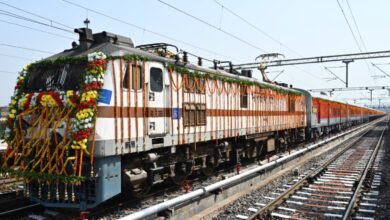
Indian Railways Expands Passenger Connectivity and Freight Capacity in August 2026

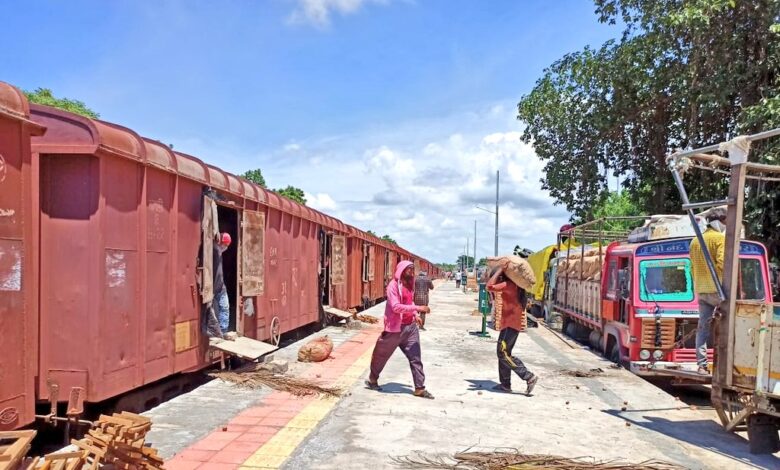
Freight loading rises 5.4%; 14 Amrit Bharat services regularised and five new Gati Shakti Cargo Terminals commissioned
Indian Railways recorded significant growth in both passenger connectivity and freight transportation during August 2026, with the national rail network expanding services, strengthening logistics infrastructure and responding to rising travel demand.
During the month, 14 Amrit Bharat services were regularised from special trains into regular services, taking the total number of Amrit Bharat services to 86. These trains have strengthened affordable long-distance connectivity between several major cities and regions, including Uttar Pradesh, Bihar, Gujarat, Maharashtra and Tamil Nadu.
On the freight front, Indian Railways loaded 137.9 million tonnes of freight in August 2026, compared with 130.9 million tonnes during the corresponding month last year. This represents a 5.4 per cent year-on-year increase. Freight revenue also grew by 6.27 per cent, reflecting continued demand for rail transportation from major economic sectors.
At the same time, five new Gati Shakti Cargo Terminals (GCTs) were commissioned during August, taking the cumulative number of commissioned terminals to 149 as of August 31, 2026.
Freight Loading Registers Strong Growth
The growth in freight loading highlights the continuing role of Indian Railways in supporting India’s industrial and economic activity. During August 2026, the railway network handled 137.9 million tonnes of freight, up from 130.9 million tonnes in August 2025.
| Freight Indicator | August 2025 | August 2026 | Growth |
|---|---|---|---|
| Freight loading | 130.9 MT | 137.9 MT | 5.4% |
| Freight revenue | — | — | 6.27% |
The increase was supported by higher loading of several key commodities, including coal, iron ore, steel, fertilizers, containers and other goods.
Iron ore loading increased 12.1 per cent, while clinker loading rose 10.4 per cent. Domestic container loading registered growth of 9.2 per cent, while coal loading increased by 6 per cent.
Finished steel loading grew by 4.9 per cent, mineral oil by 3.1 per cent, fertilizers by 1.6 per cent, and the category covering other goods increased by 8.2 per cent.
Key Commodity Loading Growth
| Commodity | Growth in August 2026 |
|---|---|
| Iron Ore | 12.1% |
| Clinker | 10.4% |
| Domestic Container | 9.2% |
| Balance Other Goods | 8.2% |
| Coal | 6.0% |
| Finished Steel | 4.9% |
| Mineral Oil | 3.1% |
| Fertilizers | 1.6% |
The growth in container transportation is particularly significant as it supports the movement of diverse commodities through rail-based logistics. Higher movement of industrial raw materials and finished products also strengthens supply chains connecting production centres, markets and consumption hubs.
Five New Gati Shakti Cargo Terminals Commissioned
Indian Railways commissioned five new Gati Shakti Cargo Terminals during August 2026, taking the total number of commissioned GCTs to 149.
The new terminals are located at:
| Location | State |
|---|---|
| Shivlakha | Gujarat |
| Nalli | Tamil Nadu |
| Shaktinagar | Uttar Pradesh |
| Deoragram | Madhya Pradesh |
| Brajrajnagar | Odisha |
The Gati Shakti Cargo Terminal programme is aimed at bringing modern freight-handling facilities closer to production and consumption centres.
Expansion of the GCT network can improve last-mile connectivity for industries and facilitate more efficient movement of goods by rail. Greater proximity between freight terminals and industrial or commercial centres can also help reduce unnecessary road movement and improve overall logistics efficiency.
The growing network of terminals is therefore becoming an important component of India’s integrated logistics infrastructure, providing industries with greater access to rail-based transportation.
14 Amrit Bharat Services Regularised
Passenger connectivity received a major boost during August, with 14 Amrit Bharat services regularised from special services into regular train operations.
With these additions, the total number of Amrit Bharat services has reached 86.
The services connect major cities and regional centres across northern, western, eastern and southern India. Among the important routes are:
| Amrit Bharat Service | Major Connectivity |
|---|---|
| Subedarganj – Lokmanya Tilak Terminus | Uttar Pradesh – Mumbai region |
| Gorakhpur – Bandra Terminus | Eastern UP – Mumbai region |
| Gorakhpur – Delhi Jn | Eastern UP – Delhi |
| Ahmedabad – Bhagalpur | Gujarat – Bihar |
| Lokmanya Tilak Terminus – Prayagraj Jn | Mumbai region – UP |
| Prayagraj Jn – Udhna Jn | Uttar Pradesh – Gujarat |
| Dhanbad – Coimbatore | Eastern India – Southern India |
The regularisation of these services is expected to provide passengers with more dependable travel options and improve long-distance connectivity between major urban centres and regional destinations.
For passengers from Purvanchal and eastern Uttar Pradesh, the Gorakhpur–Bandra Terminus and Gorakhpur–Delhi services provide additional links to two major metropolitan regions. These connections are particularly important for passengers travelling for employment, education, business and family-related purposes.
The Ahmedabad–Bhagalpur service strengthens direct connectivity between Gujarat and Bihar, while the Dhanbad–Coimbatore service provides a long-distance link between important industrial and employment centres in eastern and southern India.
Similarly, services connecting Prayagraj with Udhna and Mumbai provide additional options for passengers travelling from Uttar Pradesh towards western India.
The expansion of Amrit Bharat services reflects Indian Railways’ continued emphasis on providing affordable and comfortable long-distance travel, particularly for passengers travelling between major cities and emerging regional centres.
Passenger Traffic Continues to Rise
Passenger movement also recorded growth during August 2026. Indian Railways carried 67.27 crore passengers, compared with 64.43 crore passengers in August 2025.
The suburban segment recorded particularly strong growth, with passenger numbers increasing by 9.02 per cent.
| Passenger Traffic | August 2025 | August 2026 | Growth |
|---|---|---|---|
| Total passengers | 64.43 crore | 67.27 crore | Increased |
| Suburban passengers | 34.89 crore | 38.01 crore | 9.02% |
The increase in suburban passenger traffic underlines the continuing importance of India’s railway network as an affordable mode of everyday mobility, particularly in densely populated metropolitan and urban regions.
More Special Trains During Festival Rush
Indian Railways also increased the availability of special train services to accommodate the surge in passenger demand during the festival season.
Between August 25 and 31, 2026, the railway network operated 144 trips of Rakshabandhan Special trains, compared with 48 trips operated between August 8 and 14, 2025.
| Festival Special Trains | Trips |
|---|---|
| August 8–14, 2025 | 48 |
| August 25–31, 2026 | 144 |
The substantial increase in special train trips provided additional capacity during a period of exceptionally high demand, particularly for passengers travelling to their hometowns and families.
Such additional services help ease pressure on regular trains while providing passengers with more opportunities to travel during peak festival periods.
Passenger and Freight Expansion Strengthen Rail Network
The developments recorded during August 2026 highlight two parallel priorities for Indian Railways — expanding passenger mobility and strengthening freight logistics.
The regularisation of 14 Amrit Bharat services expands affordable long-distance connectivity, while additional festival trains provide extra capacity during periods of peak demand. Rising passenger numbers, particularly in suburban markets, demonstrate the continued dependence of millions of people on the railway network for daily and long-distance travel.
On the freight side, the 5.4 per cent increase in loading and 6.27 per cent rise in freight revenue point to continued demand from India’s industrial and economic sectors. Growth in coal, iron ore, steel, containers, clinker and other commodities indicates increasing use of rail for the movement of essential raw materials and finished products.
Meanwhile, the commissioning of five new Gati Shakti Cargo Terminals takes the national total to 149, strengthening the interface between railways and India’s wider logistics ecosystem.
Together, these developments demonstrate Indian Railways’ continuing focus on capacity augmentation, affordable passenger mobility, freight efficiency and stronger regional connectivity. As passenger demand and industrial activity continue to evolve, the expansion of train services and cargo infrastructure is expected to further strengthen the railway network’s role as a key driver of India’s transportation system and economic growth