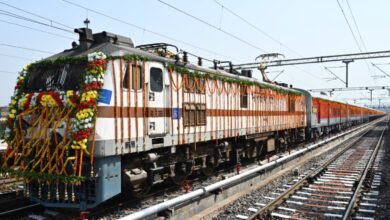
Hyderabad Set to Become Major High-Speed Rail Hub as Centre Reviews Telangana Railway Projects

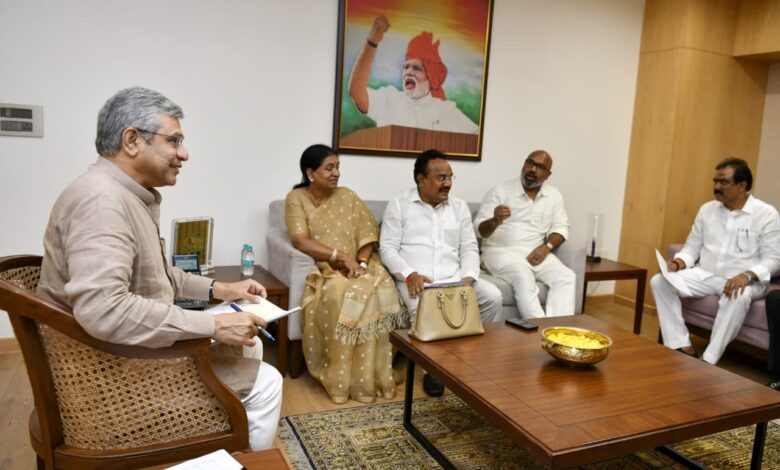
The Centre has reaffirmed its commitment to expanding railway infrastructure in Telangana, with Union Railway Minister Ashwini Vaishnaw holding discussions with a delegation of Members of Parliament, Members of the Legislative Assembly and other public representatives from the state on key railway development and connectivity projects.
The meeting focused on strengthening Telangana’s railway network, improving regional connectivity and advancing infrastructure projects that are expected to support economic growth and enhance passenger mobility across the state.
A major highlight of the discussions was the Centre’s plan to develop Hyderabad as a major high-speed rail hub. Railway Minister Ashwini Vaishnaw said the proposed high-speed rail hub is being planned with an emphasis on locating it within the city to ensure maximum convenience and public benefit. The move is expected to position Hyderabad as a key node in India’s future high-speed rail network while providing seamless connectivity for commuters and long-distance travellers.
The proposal reflects the government’s broader vision of expanding modern rail infrastructure in major metropolitan cities. By establishing Hyderabad as a high-speed rail hub, the Centre aims to improve inter-city connectivity, reduce travel time and support the city’s growing role as a technology, business and logistics centre.
Another important project discussed during the meeting was the proposed Adilabad–Armur new railway line. The Railway Minister informed the delegation that the Detailed Project Report (DPR) for the project has been completed and that the proposal will soon be moved forward for the necessary approval process.
The completion of the DPR marks an important milestone in the project’s progress. Once approved, the new railway line is expected to strengthen connectivity between northern Telangana districts, improve passenger movement and facilitate freight transportation. The project is also expected to support regional development by improving access to rail services in areas that currently have limited connectivity.
The Adilabad–Armur railway line is likely to provide better transport links for local residents while encouraging economic activities, trade and investment in the region. Improved railway infrastructure is also expected to benefit agriculture, small industries and businesses by providing faster and more efficient logistics.
Besides these two major initiatives, the meeting also reviewed several other railway development and connectivity projects across Telangana. While specific details were not disclosed, the discussions focused on accelerating infrastructure development, addressing regional connectivity requirements and ensuring the timely execution of ongoing and proposed railway projects.
The interaction formed part of the Centre’s continued engagement with elected representatives to assess infrastructure requirements and incorporate local priorities into railway planning. Public representatives highlighted various connectivity needs and discussed proposals aimed at improving passenger amenities, expanding the railway network and enhancing transportation services across the state.
Railway officials noted that Telangana continues to witness significant investments in railway infrastructure as part of the government’s broader strategy to modernise the national rail network. The emphasis remains on improving connectivity, increasing network capacity, introducing advanced railway technologies and supporting economic growth through better transport infrastructure.
The proposed development of Hyderabad as a high-speed rail hub is expected to become one of the state’s most significant railway initiatives, complementing existing transport systems while strengthening Telangana’s position in India’s future high-speed rail network.
With the Adilabad–Armur railway project moving towards the approval stage and multiple railway initiatives under review, the Centre’s latest discussions indicate continued momentum in expanding Telangana’s rail infrastructure, improving connectivity and supporting long-term regional development through modern railway projects.