Tata Motors Joins Government Scheme to Replace Old Trucks and Buses in Delhi-NCR

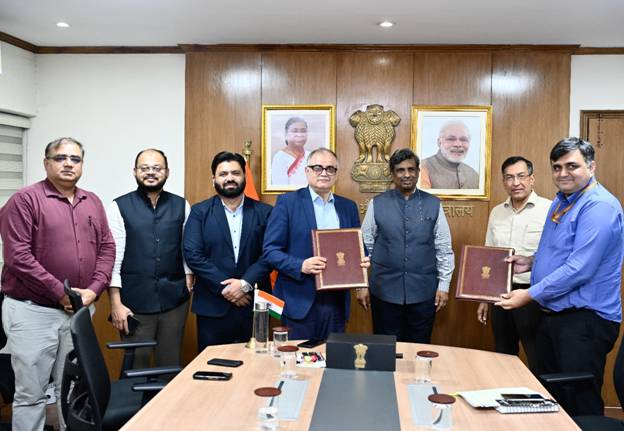
In a significant boost to the Government of India’s initiative aimed at phasing out older commercial vehicles and promoting cleaner transportation, Tata Motors has joined the vehicle replacement scheme for trucks and buses operating in the Delhi-NCR region. A Memorandum of Understanding (MoU) was signed on Wednesday between the Ministry of Road Transport and Highways (MoRTH) and Tata Motors to facilitate the implementation of the programme.
The scheme seeks to accelerate the replacement of aging and polluting commercial vehicles with newer, cleaner, and more efficient models. Under the agreement, Tata Motors will offer an 8 per cent discount on the ex-showroom price of eligible trucks and buses purchased under the scheme.
For electric commercial vehicles, the discount will be capped at the level applicable to an Internal Combustion Engine (ICE) vehicle in the corresponding Gross Vehicle Weight (GVW) category. The move is expected to encourage fleet operators and transport businesses to upgrade their vehicles while supporting the government’s efforts to reduce vehicular emissions in one of the country’s most polluted regions.
The benefits offered under the scheme extend beyond the manufacturer discount. The Central Government has announced a package of incentives designed to reduce the financial burden on vehicle owners opting for replacement. These include a 5 per cent interest subvention on vehicle financing and fixed monthly fuel vouchers for a period of five years.
In addition, participating state governments will provide substantial tax incentives. Eligible beneficiaries can avail up to 100 per cent concession on motor vehicle tax for ten years, along with a complete waiver of registration fees. These incentives are intended to make the transition to modern commercial vehicles more affordable and attractive for transport operators.
Officials said the initiative is part of a broader strategy to modernize India’s commercial vehicle fleet, improve fuel efficiency, enhance road safety, and reduce environmental pollution. Older trucks and buses are often associated with higher emissions, increased maintenance costs, and lower operational efficiency. Replacing them with newer vehicles is expected to deliver both economic and environmental benefits.
Tata Motors’ participation is being viewed as a major development for the scheme, given the company’s strong presence in India’s commercial vehicle market. The addition of Tata Motors is expected to significantly expand the reach and effectiveness of the programme across the Delhi-NCR region.
Earlier this week, commercial vehicle manufacturers Ashok Leyland and Switch Mobility also signed similar agreements with the Government of India for the implementation of the scheme. Together with Tata Motors, these companies account for approximately 50 per cent of the truck and bus market in the country, highlighting strong industry support for the initiative.
The participation of leading vehicle manufacturers is expected to improve the availability of eligible vehicles and provide buyers with a wider range of options, including both conventional and electric commercial vehicles.
Government officials believe that the combined incentives offered by manufacturers, the Centre, and state governments will create a strong financial case for fleet modernization. The programme is also expected to contribute to cleaner air quality in the National Capital Region by reducing the number of aging and highly polluting commercial vehicles on the roads.
With major industry players now onboard, the vehicle replacement scheme is poised to become a key component of India’s efforts to promote sustainable mobility, modernize freight and passenger transport, and support the transition towards a cleaner and more efficient commercial vehicle ecosystem.