Historic Qadian–Beas Railway Line Project Revived After Nearly a Century, Says Ravneet Singh Bittu

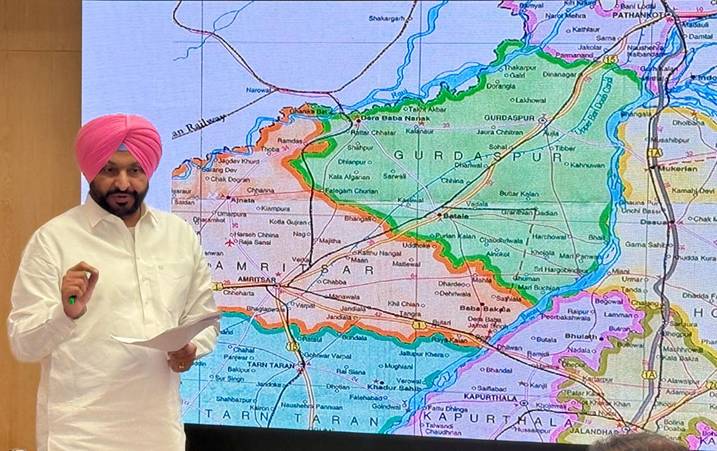
In a major infrastructure boost for Punjab’s Majha region, the Government of India has revived the long-pending Qadian–Beas New Railway Line Project, nearly a century after it was first conceived during the British era. Union Minister of State for Railways and Food Processing Industries, Shri Ravneet Singh Bittu, announced the revival of the project while addressing the media and described it as a historic step towards enhancing connectivity, tourism, and economic development in the state.
Expressing gratitude to Prime Minister Narendra Modi and Railway Minister Ashwini Vaishnaw, Bittu said the Centre remains committed to strengthening railway infrastructure across Punjab and ensuring balanced regional development through improved transportation networks.
The proposed railway line will connect Qadian in Gurdaspur district with Beas in Amritsar district through a 39.68-kilometre broad-gauge corridor. The project is estimated to cost approximately ₹1,400 crore and will be executed by Northern Railway. The new alignment will pass through key towns and villages including Qadian, Dhapai, Ghuman, Butala, Sathiala, and Beas, bringing several parts of the Majha belt onto the railway map and improving mobility for local residents.
According to the Minister, the project will feature modern railway infrastructure designed to meet contemporary operational and safety standards. The planned facilities include two crossing stations at Ghuman and Butala, 11 major bridges, 121 minor bridges, and 54 Road Under Bridges (RUBs). In addition, the corridor will be equipped with advanced signalling and telecommunication systems, along with the deployment of Kavach, India’s indigenous train collision avoidance system aimed at enhancing railway safety.
Tracing the history of the project, Bittu noted that the Qadian–Beas rail link was originally approved by the then North-Western Railway during 1928–29. Construction work had progressed significantly by the early 1930s. However, due to changing circumstances and shifting development priorities, the project was eventually shelved before completion.
Recognizing its long-term strategic and developmental importance, the railway line was later revived under the Socially Desirable Rail Connectivity Programme and included in the supplementary Railway Budget for 2010–11. Despite this, procedural delays and administrative hurdles prevented its execution. The project has now received fresh momentum with a revised detailed estimate of around ₹1,400 crore, paving the way for its implementation.
Beyond improving regional connectivity, the railway line is expected to serve an important strategic purpose. Officials said it would act as an alternative rail corridor to the critical Amritsar–Pathankot railway section during emergencies and operational contingencies. This additional route is expected to strengthen the resilience and flexibility of railway operations in northern India.
The Minister emphasized that the project is likely to generate substantial economic benefits for the region. Improved rail connectivity will provide farmers with better access to markets and facilitate faster transportation of agricultural produce. It is also expected to boost trade, commerce, and small-scale industries by reducing transportation costs and improving logistics efficiency. Furthermore, the project will create employment opportunities during both the construction and operational phases while attracting new investments and economic activity across the Majha region.
The railway line is also expected to significantly enhance access to several important religious and spiritual destinations. These include Qadian, the birthplace of the Ahmadiyya Muslim Community, Dera Baba Jaimal Singh in Beas, Sri Darbar Sahib, Dera Baba Nanak, Gurdwara Achal Sahib, Gurdwara Bhagat Namdev Ji in Ghuman, Gurdwara Sahib Patshahi Panjavi, Burj Sahib, Gurdwara Baba Raja Ram Ji, Pandori Dham, Ram Sharnam Temple, and the Shirdi Sai Temple in Gurdaspur. Improved rail connectivity is expected to boost religious tourism and make travel more convenient for pilgrims and visitors from India and abroad.
Congratulating the residents of Qadian, Beas, Ghuman, Butala, Sathiala, and the wider Majha region, Bittu described the revival of the project as a landmark achievement. He reaffirmed the government’s commitment to securing all necessary approvals and ensuring the timely execution of the railway line, which is expected to transform connectivity and drive long-term socio-economic growth in the region.