
Ashwini Vaishnaw Leads Major AI Curriculum Revamp With Industry Collaboration
Government plans practical, industry-driven AI education with enhanced faculty training, shared infrastructure and nationwide curriculum reforms for future-ready technology workforce.

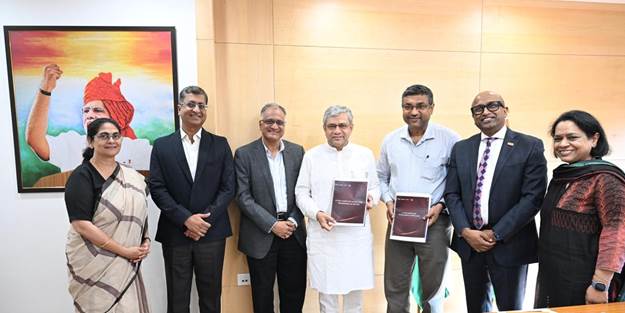
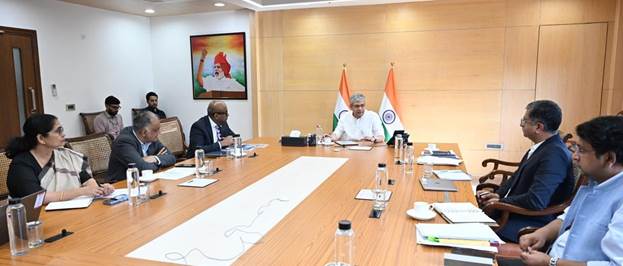
The Government of India has initiated a major overhaul of the Artificial Intelligence (AI) curriculum in collaboration with industry leaders to prepare students for rapidly evolving technological demands. Union Minister for Electronics and Information Technology Ashwini Vaishnaw chaired a high-level meeting in New Delhi with the AI Curriculum Taskforce to discuss reforms aimed at strengthening practical learning, industry integration and faculty development in technical education.
The Taskforce, working alongside industry experts and the National Association of Software and Service Companies (NASSCOM), conducted a detailed study of existing B.Tech Computer Science and related curricula across Indian institutions. While the study noted a significant increase in AI-related subjects in recent years, it also highlighted major gaps in teaching methods, infrastructure and hands-on training, particularly in areas such as Generative AI, Machine Learning Operations (MLOps) and foundational AI model development.
A key recommendation of the Taskforce is to move away from traditional lecture-based teaching towards application-oriented learning driven by real industry use cases from the first semester itself. The proposed curriculum framework also seeks to formally integrate AI courses into the academic credit system with a structured semester-wise rollout.
The revamp plan strongly emphasizes practical exposure for students. According to the recommendations, hands-on learning in AI-related courses should increase from the current 25–30 percent to nearly 40–75 percent, depending on the degree programme and specialisation. The curriculum would also include capstone projects, end-to-end AI solution engineering and exposure to low-code and no-code AI tools to ensure students gain industry-relevant experience before graduation.
Another major focus area is the integration of Responsible AI and AI Governance across all semesters rather than limiting the topic to standalone modules. The proposed model also introduces flexible multiple entry-exit options under which students can receive a Certificate after one year, a Diploma after two years and an Advanced Diploma after completing three years of study.
The consultation also placed significant emphasis on faculty development, recognising that curriculum reform cannot succeed without adequately trained educators. Recommendations include structured Train-the-Trainer programmes, curated course material, standardised assessment systems and modernised laboratories aligned with current industry tools and platforms.
Participants further suggested involving experienced industry professionals as adjunct faculty members, similar to the model adopted by premier business schools. This move is expected to bring practical expertise directly into classrooms and bridge the gap between academic learning and industry requirements.
A major proposal discussed during the meeting was the creation of a national-level shared AI infrastructure supported jointly by the Government, industry and academic institutions under a “triple helix” model. The initiative aims to provide equitable access to advanced computing resources, including GPU compute power, edge devices, software stacks and subscription-based AI platforms for colleges and universities across the country.
The meeting concluded with consensus on four immediate priorities. These include estimating national requirements for AI infrastructure and faculty, engaging with the All India Council for Technical Education (AICTE) for formal adoption of the revised curriculum, launching an industry-led faculty development roadmap, and creating a separate AI awareness programme for non-STEM disciplines.
The proposed reforms are expected to play a crucial role in preparing India’s future workforce for the growing global AI economy and strengthening the country’s position in emerging technologies.